
Salix breviserrata
Salix breviserrata
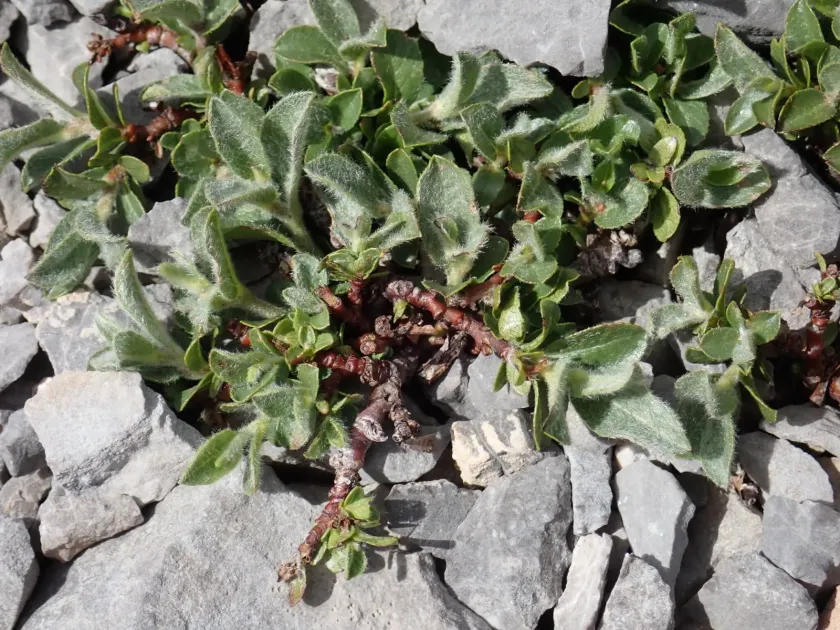
Description
Growing requirements
Salix breviserrata is a distinctive, low-growing shrub belonging to the Salicaceae family. It is an alpine specialist, uniquely evolved to thrive in high-altitude environments where most shrub species fail to establish due to extreme wind and cold temperatures.
The plant originates from the mountainous regions of Europe, specifically the Alps and Pyrenees. Its natural habitat consists of rocky slopes, scree, and moist calcareous grasslands, where it often plays a vital role in ecological stability and erosion control.
The cultural requirements are strict regarding drainage. It demands light, airy, and mineral-rich soils. In a garden setting, it is essential to mimic its native alpine environment by using a substrate mixed with grit or crushed limestone to prevent water accumulation near the crown.
Climate tolerance is one of the key features of this species. It is extremely hardy and thrives in environments with short, cool growing seasons. Conversely, it struggles significantly in high-heat zones and humid lowland climates, which makes its cultivation exclusive to temperate regions.
Maintenance involves minimal intervention. It does not require intensive pruning or fertilization. Instead, focus should be on ensuring adequate air circulation around the foliage to prevent fungal infections and monitoring for pest ingress during the brief periods of rapid growth.
Harvesting
While Salix breviserrata has no commercial value in terms of wood production or agricultural yield, its ornamental value is significant. It is highly sought after by collectors of alpine flora and landscape architects designing specialized rock gardens or erosion-prone slopes.