
Salix calodendron
Salix calodendron
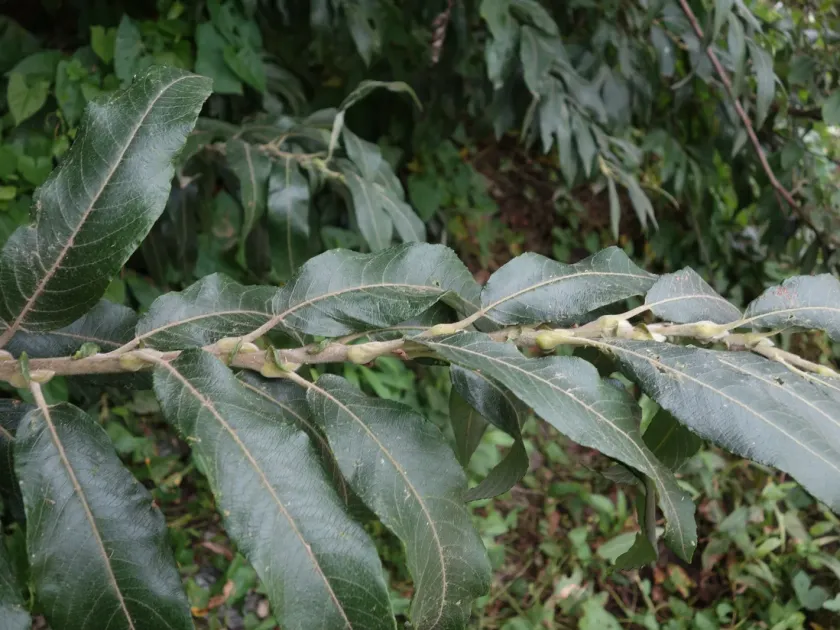
Description
Sowing dates
Planting Salix calodendron is primarily carried out using cuttings during the spring season when soil temperatures reach 5–8 degrees Celsius.
April is considered the optimal time for establishing a plantation, allowing the plant to root effectively before the onset of summer heat and drought.
The use of woody cuttings, 20–25 centimeters in length, ensures high survival rates of the crop across prepared planting sites.
It is important to maintain planting density based on intended use, with a common layout using row spacing of 75–150 centimeters.
For industrial cultivation aimed at biomass, mechanized planting is preferred to ensure deep insertion of the cutting into the soil profile.
Growing requirements
Salix calodendron belongs to the Salicaceae family and is characterized by a high demand for soil moisture throughout the growing season.
The crop prefers fertile loam or sandy loam soils with a neutral or slightly acidic pH to support active shoot development.
The plant exhibits excellent winter hardiness and adaptability to temperate climates, though standing water during winter must be avoided.
Light exposure plays a crucial role as the willow is heliophilic; shading significantly reduces annual biomass growth rates.
Stable yields require regular monitoring of groundwater levels, ideally kept between 0.5 and 1.5 meters from the soil surface.
Yield
Economic utilization of this willow focuses on harvesting wood biomass for bioenergy production and pulp manufacturing purposes.
Under optimal agronomic conditions, annual dry wood yields can reach 10–15 tons per hectare in established plantations.
Growth intensity depends on the genetic potential of the specific clone and the application of fertilizers, particularly nitrogen-based inputs.
The harvesting cycle for energy plantations typically ranges from 2 to 3 years to maximize the production of high-quality wood.
Constant renewal of the root system ensures the plantation remains productive for 20–25 years without the need for replanting.
Main diseases and pests
Major threats to plantations include leaf-eating insects like the willow beetle, which can destroy significant amounts of foliage.
A common fungal disease is willow rust, which affects leaves and diminishes the plant's overall photosynthetic efficiency.
Anthracnose infections are also possible, manifesting as dark spots on stems that lead to branch weakness and potential dieback.
To prevent outbreaks, it is recommended to use resistant clones and perform timely sanitary pruning of affected branches.
Chemical control with insecticides and fungicides is only justified during early development stages or severe pest infestations.
Harvesting
Harvesting is performed during the winter or early spring while the plant is dormant and all foliage has naturally shed.
Mechanized harvesting using specialized forage harvesters allows for simultaneous cutting and chipping of wood for efficient storage.
The remaining stumps regenerate quickly, producing new shoots within the very first growing season following the harvest.
Cutting height should be kept to a minimum to stimulate root-based regrowth and prevent premature aging of the plantation.
Collected biomass requires mandatory drying before usage in boiler systems to ensure optimal heating capacity and combustion efficiency.