
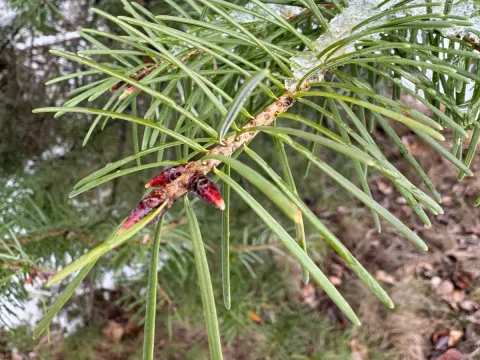
Guinier's Douglas Fir
Pseudotsuga guinieri
Guinier's Douglas Fir (Pseudotsuga guinieri) is a distinctive member of the Pinaceae family, taxonomically related to the broader Pseudotsuga complex. This conifer is highly regarded for its potential in sustainable silviculture and its adaptability to specific temperate zones.
What the section contains
Guinier's Douglas Fir
The culture thrives in environments characterized by cool, moist climates with frequent rainfall. It exhibits a preference for mountainous or hilly terrains where high air humidity mitigates the risk of moisture stress during the peak summer months, ensuring consistent metabolic activity.
Soil requirements are relatively specific: the species requires deep, aerated soils that allow for extensive root penetration. Waterlogging must be avoided, as the root system of Pseudotsuga guinieri is particularly sensitive to anaerobic conditions, which can lead to significant mortality rates.
Cultivation practices involve careful site selection and spacing to maximize sunlight exposure while protecting young saplings from harsh, desiccating winds. Proper mineral nutrition, focusing on nitrogen and magnesium, is essential during the early developmental stages of the plantation.
From a commercial perspective, this species is cultivated primarily for its high-quality softwood timber, which is utilized in construction and furniture making. Its growth rate, if well-managed in appropriate climates, allows for viable harvest cycles in managed forest systems.
The primary threats to Pseudotsuga guinieri include fungal infections like needle cast, which are exacerbated by high humidity and poor plantation hygiene. Effective management requires thinning stands to improve airflow and the removal of infected plant debris from the forest floor.
Insect pests, including various species of bark beetles and needle-eating larvae, remain a constant concern for commercial growers. Implementing a comprehensive integrated pest management (IPM) strategy, including regular forest scouting, is vital to maintaining the health and productivity of the stand.