
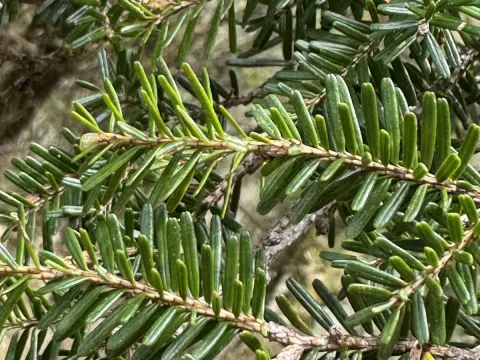
Chinese hemlock
Tsuga chinensis
Chinese hemlock (Tsuga chinensis) is a prominent evergreen coniferous species belonging to the Pinaceae family. Native to the mountainous regions of China, Taiwan, and Vietnam, it is celebrated for its graceful, drooping branches and delicate, dark green foliage.
What the section contains
Chinese hemlock
Botanically, the tree features needles that are linear and flat, displaying two distinct white stomatal bands on the underside. It can grow into a majestic tree, often reaching heights of over 30 meters, characterized by a conical shape that broadens as the tree matures.
For successful cultivation, Tsuga chinensis requires moist, well-draining, and acidic soil. It is highly sensitive to soil compaction and waterlogging, meaning that site selection and soil preparation are critical for the tree's health and longevity.
The species thrives in cool, humid climates and is generally shade-tolerant, especially in its juvenile stages. It performs best when shielded from harsh winds, which can cause needle desiccation, particularly in regions with cold, dry winter air.
Regarding its хозяйственное use, Chinese hemlock is widely planted as an ornamental specimen in parks and large gardens. Beyond landscaping, its high-quality, lightweight timber is valued in forest management for construction and furniture manufacturing.
The primary threats to the Chinese hemlock include fungal diseases such as root rot, which are often encouraged by poor drainage and excessive moisture. These diseases can devastate the tree's vascular system if not identified and treated early.
Pest issues are commonly associated with adelgids and scale insects, which feed on the sap and cause needle discoloration or premature needle drop. In some regions, spider mites can also become a significant nuisance during hot, dry spells.
Effective management involves maintaining adequate airflow through the canopy to prevent the buildup of pathogens. Pruning dead or diseased wood is an essential practice to reduce the pressure from fungal spores and overwintering insect populations.
Integrated pest management strategies should be employed, focusing on cultural practices before relying on chemical control. Ensuring the tree is not under stress due to drought or nutrient deficiency is the best natural defense against infestations.
Regular monitoring of the foliage and stems is necessary for early detection. If chemical intervention is required, applications should be timed carefully to minimize impact on the surrounding ecosystem while effectively targeting the specific pest or disease.