
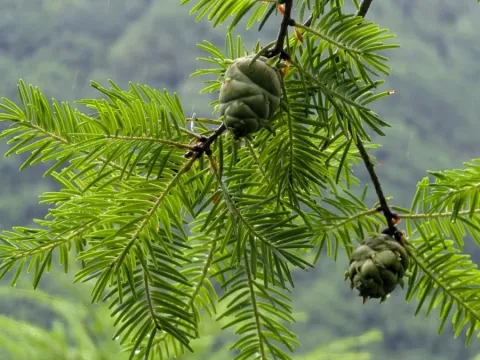
Forrest's Douglas fir
Pseudotsuga forrestii
Forrest's Douglas fir (Pseudotsuga forrestii) is a distinct coniferous species belonging to the Pinaceae family. It is recognized for its unique morphology and is highly valued by botanists and specialized nursery professionals.
What the section contains
Forrest's Douglas fir
The native range of this tree is located in the mountainous regions of Southwest China. The species thrives in temperate, high-altitude climates where humidity remains relatively high throughout the growing season.
For successful cultivation, the species requires deep, fertile, and well-drained soils. Sites with heavy clay or poor drainage should be avoided as the tree is susceptible to root decay under waterlogged conditions.
This conifer prefers a sunny position but benefits from some protection from harsh midday sun during its establishment phase. Consistent environmental conditions and shelter from strong, drying winds are essential for optimal growth.
In terms of usage, Forrest's Douglas fir is primarily utilized in arboretums and large landscape projects for its ornamental appeal. Its wood quality also makes it a subject of interest in forest genetics and tree breeding.
Fungal infections remain the primary threat to the vitality of the tree, especially in regions with poorly ventilated microclimates. Root rots triggered by soil pathogens can be devastating if drainage is not managed.
Common insect pests include adelgids and aphids, which can infest the needles and saplings. These pests extract plant fluids, leading to stunted growth and yellowing of the foliage if left unchecked.
Management of pests involves a combination of mechanical removal of affected parts and the application of horticultural oils or systemic insecticides when necessary. Regular scouting is critical during spring and summer months.
Preventive measures include the application of copper-based fungicides to protect the tree from foliage blight and other fungal pathogens. Sanitation practices, such as removing fallen needles, help reduce inoculum levels.
Maintaining tree vigor through proper irrigation and balanced fertilization creates a natural defense mechanism against many common forest pests. Monitoring the health of the root zone is as important as inspecting the crown.