
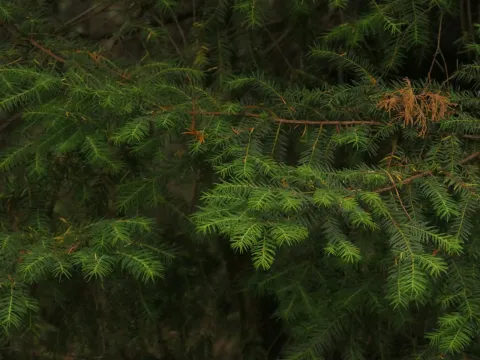
Himalayan Hemlock
Tsuga dumosa
Himalayan Hemlock, scientifically known as Tsuga dumosa, is a significant species within the Pinaceae family, native to the rugged mountainous terrain of the Himalayas. This evergreen conifer is highly valued for its elegant, weeping habit and dark green needles, creating a graceful aesthetic in larger landscapes.
What the section contains
Himalayan Hemlock
In terms of climate, the Himalayan Hemlock thrives in cool, humid environments that replicate its natural subalpine habitat. It performs best in regions where temperatures remain moderate and humidity is high, as the tree is not well-adapted to extreme heat or prolonged drought conditions.
The soil requirements are specific: the tree demands deep, fertile, and well-drained soil with a slightly acidic to neutral pH level. A high organic matter content significantly boosts growth, while heavy, waterlogged soils must be avoided to prevent root damage and ensure aeration.
Regarding agrotechnical practices, planting should occur in a location that offers partial shade or protection from intense, direct sunlight. Regular irrigation is necessary during the establishment phase and throughout dry spells, ensuring the root ball remains consistently moist but not saturated.
Host use of Tsuga dumosa is primarily ornamental, serving as a focal point in arboretums or expansive garden designs. While the wood has been utilized locally in its native range for basic construction and traditional crafts, its commercial application is largely secondary to its ecological and aesthetic value.
The most common health issues for Himalayan Hemlock stem from poor drainage, which invites root rot caused by Phytophthora species. This disease is particularly destructive in nurseries or garden settings where water management is not strictly controlled.
Pest threats include the hemlock woolly adelgid, which feeds on the tree's sap and can severely weaken it over time. Spider mites also pose a risk during hot, dry summer months, leading to premature needle drop and a diminished appearance of the foliage.
Effective management involves consistent monitoring of the canopy for any signs of discolored needles or the presence of insects. Horticultural oils and systemic insecticides are the standard treatments for managing mite and adelgid populations when they exceed economic or aesthetic thresholds.
Sanitation practices such as removing dead wood and maintaining proper air circulation around the crown help prevent the spread of fungal spores. Ensuring the tree is not overcrowded with other vegetation reduces the humidity trapped near the needles, further inhibiting fungal pathogen development.
Maintaining high plant vigor through proper mulching and balanced fertilization can help the tree better withstand environmental stress and pest pressure. Ultimately, placing the tree in its ideal ecological niche is the most effective way to minimize the need for chemical intervention.