
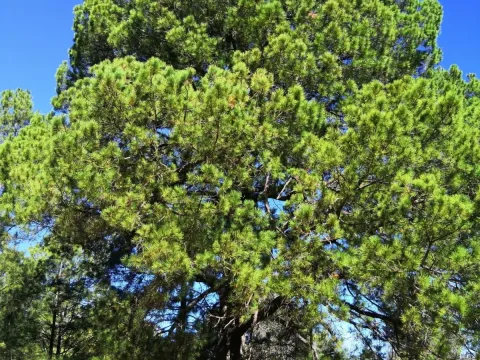
Herrera's pine
Pinus herrerae
Herrera's pine (Pinus herrerae) is a coniferous tree belonging to the family Pinaceae. It is native to the mountainous regions of Mexico, primarily found in the temperate highland forests.
What the section contains
Herrera's pine
This species thrives at elevations between 1600 and 2700 meters above sea level, where it adapts to the specific climatic conditions of the Trans-Mexican Volcanic Belt.
It prefers well-drained, porous soils that are often of volcanic origin. Good soil aeration is critical for the development of its root system, as the species is sensitive to waterlogged conditions.
Botanically, it is distinguished by its needle-like leaves, which grow in fascicles, and its relatively narrow crown. The tree demonstrates a moderate growth rate when established in suitable conditions.
Climate requirements include a balance of seasonal precipitation and temperate temperature ranges. It requires significant sunlight for optimal growth and cannot tolerate extreme shading in early developmental stages.
The primary economic use of Herrera's pine is in the timber industry. The wood is valued for its strength, density, and versatility in construction and furniture making.
Industrial applications include the production of structural lumber, plywood, and various woodworking products, which are essential for regional infrastructure development.
Sustainable forest management practices are implemented to ensure the yield of high-quality timber while maintaining the ecological integrity of the mountain forest stands.
Beyond timber, the species contributes to forest carbon sequestration and soil conservation, playing a vital role in maintaining regional hydrological cycles.
Yield efficiency is directly linked to density management and proper silvicultural practices, which help optimize the volume of merchantable timber over the life of a plantation.
The main biological threats include outbreaks of bark beetles, which pose a significant risk to tree health by boring into the bark and cambium, potentially killing mature specimens.
Fungal pathogens and rust diseases represent a constant threat to saplings and younger trees, particularly in environments with high humidity levels and limited air circulation.
Wildfires are a major environmental challenge, causing severe damage to Herrera's pine habitats and impacting the long-term regeneration capacity of forest areas.
Human activities, including over-harvesting and land-use changes, exacerbate the vulnerability of existing populations, making scientific forest management a priority.
Prevention strategies involve rigorous monitoring programs, the removal of diseased or infested timber to prevent spread, and the promotion of biodiversity within forest plantations.