
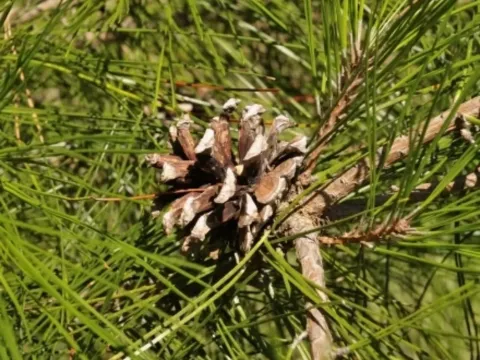
Henry pine
Pinus henryi
Henry pine (Pinus henryi) is an evergreen coniferous species belonging to the Pinaceae family, native to the mountainous regions of central and southern China. It is a distinctive tree known for its elegant habit and long, thin needles that set it apart from more common pine varieties.
What the section contains
Henry pine
The species prefers well-drained, fertile forest soils with a slightly acidic to neutral pH level. It does not tolerate waterlogged conditions, making high-ground locations or slopes with good drainage systems the preferred sites for successful cultivation.
Climatically, Henry pine thrives in temperate, humid regions. It is well-adapted to high-altitude environments, where cool summers and moderate winters provide the necessary conditions for healthy growth and needle development.
Light requirements are significant for this species; it is considered light-demanding. Planting should be executed in areas that receive full sunlight for the majority of the day, ensuring that seedlings are not overshadowed by denser, faster-growing canopy trees.
Agricultural techniques for Henry pine involve careful monitoring of initial growth stages. Establishing a deep, healthy root system is paramount in the first three years, which may require supplemental watering during prolonged dry spells.
In terms of forest management, Henry pine is highly valued for its quality wood, which is known for its durability and resistance to decay. It is considered an important species for reforestation and species enrichment projects in its native range.
The ornamental value of the species is growing among landscaping professionals. Its aesthetic structure makes it a suitable candidate for large gardens, botanical estates, and public park collections where a rare specimen is desired.
Yield efficiency in forestry is dictated by proper spacing during the plantation phase. A spacing of 3 to 4 meters is generally recommended to allow sufficient room for lateral root growth and air circulation, preventing the development of humidity-trapped pockets.
Seed production is relatively slow, and the tree often requires several years before reaching full reproductive maturity. Nursery propagation involves careful collection of cones and specialized seed bed preparation to ensure high germination rates.
As a timber resource, it is a long-term investment. The wood is traditionally used for small-scale construction and specialized woodcrafts, where its fine grain and density are highly appreciated.
Fungal diseases related to high humidity represent the primary threat to the health of Henry pine stands. Maintaining proper air circulation by removing dead or overcrowded lower branches is a standard preventative measure in silviculture.
Pest management focuses on wood-boring insects and aphids, which can compromise the structural integrity of the trunk. Integrated pest management (IPM) practices, including the use of pheromone traps, are often employed to maintain tree health.
Environmental stressors, particularly excessive heat and air pollution, can impact the longevity of the trees. Henry pine is relatively sensitive to urban air quality and performs best in clean, rural, or semi-mountainous environments.
Small mammal damage, such as gnawing on bark or roots, poses a risk to young saplings. Physical barriers, like metal guards or fine-mesh fencing around the base of the tree, can effectively prevent such damage during the early development phase.
Competition from invasive species can stunt the growth of young Henry pines. Continuous weeding and maintenance of the forest floor are essential practices for ensuring that the saplings receive adequate nutrients and light.