
Distylium
Distylium Siebold & Zucc.
Distylium is a genus of evergreen shrubs and small trees belonging to the Hamamelidaceae family. Native to East Asia, including regions in China, Japan, and the Himalayas, these plants naturally thrive in moist forest environments and on mountain slopes.
What the section contains


Distylium
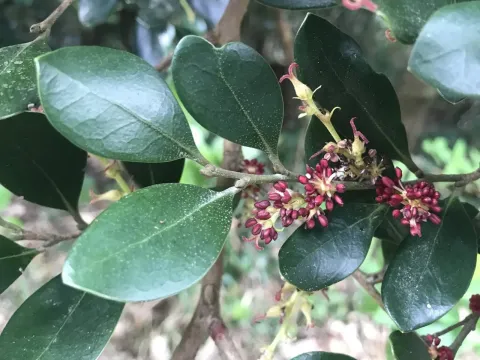
Botanically, the plant is characterized by a dense, compact crown and leathery, glossy foliage. The flowers of Distylium lack traditional petals but feature prominent red or maroon stamens, giving the plant a unique aesthetic appeal during its blooming period in late winter or early spring.
The culture has moderate requirements for growth conditions, preferring well-drained, fertile soils with an acidic to neutral pH. It is essential to prevent waterlogging, as the root system is sensitive to excessive moisture and may suffer from rot if drainage is compromised.
The optimal planting site is an area with partial shade or filtered light, protected from harsh cold winds. While some species show resistance to light frosts, most varieties are warmth-loving and require protection when temperatures drop below typical regional norms.
In landscaping, Distylium is highly valued as an ornamental crop. It is frequently used for hedges, specimen planting, or borders, thanks to its high tolerance for pruning and shaping, which allows for versatile design applications.
Distylium is generally considered a resilient plant; however, improper agricultural practices can lead to infestations by common pests. Specifically, scale insects and spider mites are frequent invaders that can weaken the overall vitality of the shrub if left unchecked.
Among fungal diseases, root rot presents the greatest threat, often caused by overwatering and poor soil aeration. To prevent this, growers must strictly monitor soil moisture levels and ensure efficient drainage during periods of heavy rainfall.
Powdery mildew may occur, manifesting as a characteristic white film on the leaves, which can cause significant deformation of the leaf tissue. Treatment typically involves the application of broad-spectrum fungicides and the removal of affected branches.
Maintaining strong plant immunity through balanced fertilization with complex fertilizers is a critical aspect of protection. A vigorous, healthy plant is significantly more effective at resisting insect attacks and the development of pathogenic organisms.
Regular monitoring of the foliage and stems allows for the detection of diseases at an early stage. It is recommended to perform routine inspections of the shrubs at least once every two weeks during the active growing season.