
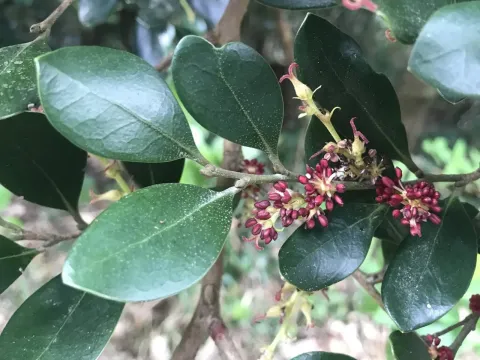
Distylium
Distylium
Distylium is a genus of evergreen shrubs and trees belonging to the Hamamelidaceae family. Native to East Asia, including China and Japan, these plants are highly prized for their hardiness and dense, lustrous foliage.
What the section contains

Distylium
The culture thrives in a wide range of soil conditions, but performs best in fertile, well-drained, acidic to neutral soils. It is critical to ensure that the site is not prone to waterlogging, which can damage the plant's root system.
Distylium is known for its remarkable heat and drought tolerance once established. It adapts well to both full sun and partial shade, making it a versatile choice for various landscape applications across multiple hardiness zones.
In landscaping, Distylium is primarily used as a foundational shrub, for creating dense privacy hedges, or as a structural element in borders. Its ability to tolerate regular pruning allows for precise shaping of the crown.
Cultural practices include applying a balanced fertilizer in the early spring and providing sufficient water during the initial growth period to ensure deep root establishment in the garden soil.
Distylium is widely recognized as a robust, low-maintenance plant that exhibits excellent resistance to common pests and diseases found in ornamental landscaping.
However, excessive soil moisture combined with poor drainage can occasionally lead to Phytophthora root rot, a serious fungal issue that requires immediate attention and site correction.
While infrequent, scale insects or aphids may appear on tender new growth. Monitoring for these pests during the spring season is recommended to prevent significant infestations.
Powdery mildew may develop in areas with stagnant air and consistently high humidity. Improving airflow through selective pruning is the most effective cultural control method.
Overall, healthy specimens are rarely bothered by major pathogens. Maintaining proper mulch layers and avoiding overhead watering can help mitigate most environmental risks for this species.