
Monterey cypress
Cupressus macrocarpa Hartw.
Description
Growing requirements
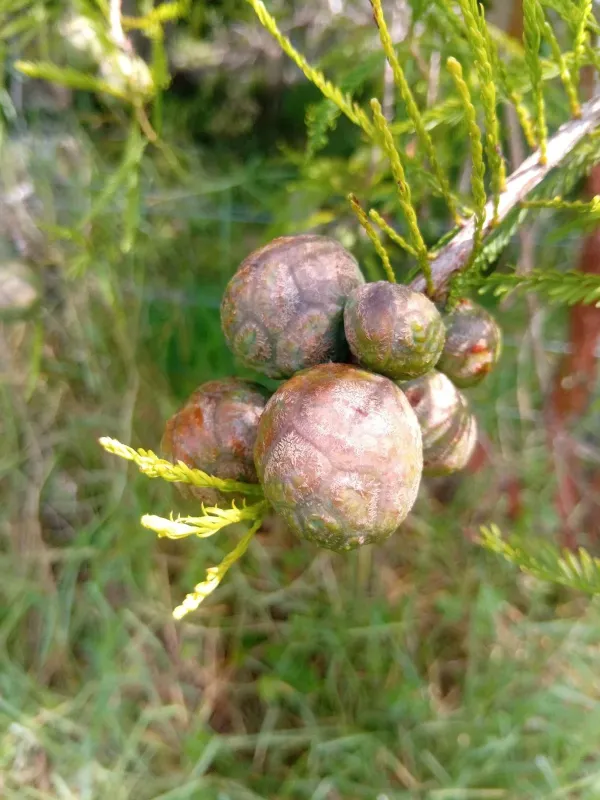
The Monterey cypress (Cupressus macrocarpa) is a species of conifer in the Cupressaceae family. It is famous for its fast-growing habit and its ability to withstand salt-laden winds, making it a key species for coastal landscaping.
Native to the Central Coast of California, it thrives in a Mediterranean climate. While it can grow to massive sizes in the wild, it is often kept as a ornamental feature or a hedge in various parts of the world where frost is minimal.
The species requires deep, well-draining soil to perform optimally. It is particularly sensitive to waterlogged conditions, which can lead to rapid root decay, especially in containerized plants.
Regarding climate, it prefers mild temperatures and high humidity levels. In inland regions with hot and dry summers, the plant requires frequent misting to simulate the coastal environment it is naturally adapted to.
Cultivation practices involve regular pruning to maintain the desired shape and size, as the tree tends to develop a spreading crown if left unattended over many years in an open landscape.
Main diseases and pests
Cypress canker, caused by the fungus Seiridium cardinale, is the most significant threat to the species, leading to branch dieback and eventually the decline of the entire tree.
Aphids and spider mites are common insect pests that thrive in dry indoor environments or stressed trees. Frequent inspections of the inner foliage are necessary to detect early stages of infestation.
Root rot, primarily caused by Phytophthora species, remains a major issue in nurseries and landscapes with poor soil structure. Proper soil management and drainage are the primary lines of defense.
Scale insects can also colonize the needles and stems, weakening the tree by sucking sap. Systemic insecticides are often employed in severe cases to restore the tree's vigor.
Environmental stress, such as extreme temperature fluctuations or improper watering, weakens the plant's natural immune system, making it much more susceptible to secondary pathogens.