
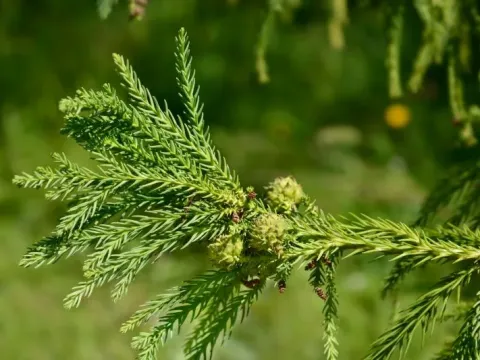
Cryptomeria
Cryptomeria
Cryptomeria, often referred to as the Japanese cedar, is a monotypic genus of conifer in the cypress family, Cupressaceae. It is a large evergreen tree that features a distinct conical shape and reddish-brown fibrous bark that peels in long strips.
What the section contains

Cryptomeria
The species is native to Japan and parts of China, where it is highly valued as a significant timber source. It thrives in humid, subtropical climates with high annual rainfall, which mimics its natural montane environment.
Optimal growth requires deep, nutrient-rich, and well-drained soils. The plant is calcifuge, meaning it strongly prefers acidic soil conditions and will struggle or suffer from nutrient deficiency if planted in alkaline or heavy clay soils.
Climate demands include protection from harsh, dry winds and extreme frosts. While it is hardy in many temperate regions, young trees require shelter from freezing temperatures and cold drafts to ensure successful establishment during the first few years.
Cultural practices focus on consistent irrigation and maintaining high ambient humidity. Mulching around the base of the tree is essential to conserve soil moisture, regulate root temperature, and contribute to the organic acidity of the soil profile.
Spider mites represent a significant threat to Cryptomeria, particularly in dry and poorly ventilated conditions. These pests thrive in low-humidity environments, causing the foliage to appear dull, yellowish, and eventually drop prematurely.
Scale insects can infest the branches and stems, drawing sap and weakening the tree's overall vigor. Early detection through regular visual inspections is crucial for selecting the appropriate systemic insecticide treatments.
Fungal diseases like Needle Blight and various root rots are common where drainage is inadequate. Ensuring that the site has excellent water permeability is the most effective way to prevent these soil-borne pathogens from attacking the root system.
Environmental stress often manifests as browning of the foliage, which can be triggered by either excessive drought or windburn. Providing consistent moisture and choosing a site sheltered from prevailing winter winds significantly mitigates these risks.
Proper hygiene, such as removing fallen needles and dead branches, is recommended to reduce the potential for fungal spores to overwinter and re-infect the tree during the following growing season.