
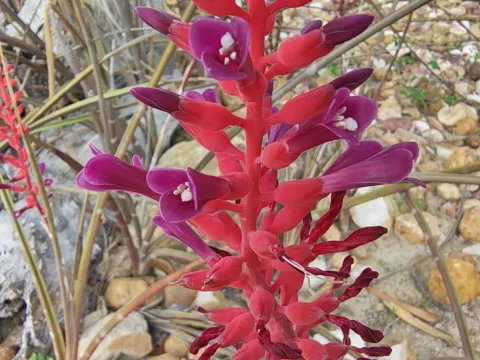
Neoglaziovia
Neoglaziovia
Neoglaziovia is a genus of flowering plants within the Bromeliaceae family. Native to the semi-arid regions of Brazil, these plants are well-adapted to survive in harsh, moisture-deficient environments.
What the section contains

Neoglaziovia
The plant grows in a rosette formation with stiff, fibrous leaves. As a typical xerophyte, it possesses biological adaptations to conserve water, making it a robust candidate for cultivation in arid landscapes.
Optimal growth requires high levels of solar irradiance and warm temperatures. It thrives in well-drained, sandy or gravelly soils where water stagnation is prevented to avoid root rot.
Climate requirements for successful commercial production are strictly tropical. The species is highly sensitive to frost, which limits its outdoor agricultural utility to specific geographic latitudes.
The cultivation practice involves propagation via offshoots or pups produced at the base of the plant. Maintenance is relatively low, focusing primarily on managing stand density and protecting against invasive weeds during the establishment phase.
The primary economic importance of Neoglaziovia lies in its leaves, which are rich in high-tensile strength fibers. Historically, these fibers have been processed into cordage, ropes, and traditional fishing nets due to their resistance to water decay.
The harvesting process involves cutting mature leaves from the rosette. Producers must ensure that the core of the plant remains undamaged to allow for continuous growth and subsequent harvest cycles.
Industrial processing involves the mechanical extraction of fibers from the leaf tissue. Modern machinery has improved the yield and purity of the fiber, making it more viable for contemporary textile and construction applications.
Yield metrics are largely determined by the specific climate and soil fertility. Unlike traditional annual crops, a well-managed plantation can provide sustained yields over several years without the need for constant replanting.
Beyond its fiber properties, the plant is also recognized for its ornamental value in dry-climate gardening. Its hardy nature and structural appearance make it an interesting species for xeriscaping projects worldwide.