
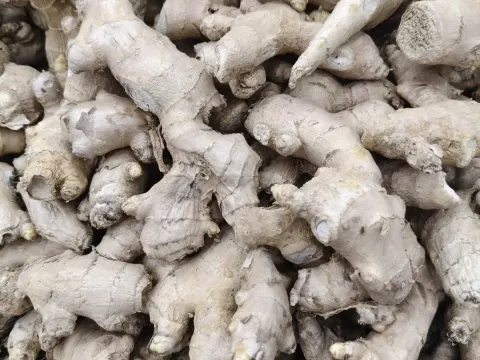
Ginger
Zingiber officinale Roscoe
Ginger (Zingiber officinale Roscoe) is a perennial herbaceous plant belonging to the Zingiberaceae family. In agricultural practices, it is typically cultivated as an annual crop due to its long growing cycle requirements.
What the section contains
Ginger
The standard method of propagation is vegetative, utilizing rhizome division. Growers select healthy, plump segments of the rhizome that contain several active vegetative buds to serve as seed pieces.
Planting takes place in spring or early summer once the soil temperature consistently reaches at least 20 degrees Celsius, as ginger requires significant warmth to initiate the sprouting process.
Before planting, rhizome sections are often treated with organic fungicides or left to callus over in a dry place for a day to minimize the risk of soil-borne pathogens attacking the fresh cuts.
The rhizomes are planted at a shallow depth, usually 5–8 centimeters deep, in well-prepared, loose soil to allow the developing rhizome mass sufficient space to expand outward and downward.
As a tropical crop, ginger thrives in warm, humid conditions. The ideal temperature range for its active growth is between 25 and 30 degrees Celsius, and it cannot tolerate frost under any circumstances.
Soil must be rich in organic matter, loose, and possess excellent drainage properties. Ginger is highly sensitive to waterlogging, which quickly leads to rhizome rot, making raised beds or container culture common.
The plant requires consistent moisture throughout its growth cycle. If rainfall is insufficient, supplemental irrigation is necessary to keep the root zone damp but not saturated, especially during the peak summer heat.
While ginger appreciates bright light, it prefers partial shade or dappled sunlight. Intense, direct sunlight can scorch the foliage and dry out the soil too rapidly, reducing the overall yield.
Regular fertilization with high-potassium fertilizers during the mid-to-late growth phase is essential for promoting dense rhizome formation and enhancing the aromatic oil content of the harvest.
The yield of ginger is heavily influenced by the length of the frost-free season. A full growing cycle of 8 to 10 months is ideal to ensure the rhizomes reach full maturity and peak spice concentration.
Commercial yields vary significantly based on variety and cultivation environment, typically ranging from 15 to 25 tons per hectare. In smaller or home-garden settings, yields are measured by the weight of the harvest per plant.
Earthing up or hilling is a critical practice for increasing yield. By mounding soil over the rhizomes as they expand, growers protect them from sun-greening and stimulate additional lateral growth.
Managing soil fertility through compost application before planting ensures a steady supply of nutrients, which directly correlates to larger, more robust rhizomes by the end of the season.
Proper harvest timing is essential, as waiting until the plant begins its natural senescence ensures that the rhizome has fully developed its characteristic pungency and medicinal properties.
Fungal diseases, particularly rhizome rot and fusarium wilt, are the most significant threats to ginger crops, usually triggered by poorly drained soil or excessive overwatering during dormant phases.
Pests such as spider mites can cause severe damage in controlled environment agriculture by sucking sap from the leaves, which stresses the plant and stunts the growth of the underground rhizomes.
Root-knot nematodes present a major challenge in many regions, causing galls on the roots and rhizomes, which drastically reduces the marketable quality and total weight of the produce.
Integrated pest management strategies, such as crop rotation and the use of certified disease-free planting material, are the most effective ways to maintain a healthy and productive ginger crop.
Using biological control agents and resistant varieties where available can help farmers mitigate damage from common pests without relying on synthetic chemicals that might affect the final product.
Harvesting usually begins when the plant’s foliage begins to yellow and die back naturally, indicating that the rhizome has stopped expanding and has reached its peak maturity.
The rhizomes are carefully unearthed using hand forks or specialized implements, taking care to avoid bruising the skin, as any damage to the surface can lead to rapid decay during storage.
After excavation, the rhizomes are cleaned and cured in a shaded, well-ventilated area for several days to harden the skin, which significantly improves the shelf life of the harvested spice.
For long-term storage, ginger should be kept in a cool, dark environment with moderate humidity, ideally packed in sand or peat to prevent desiccation and maintain quality for several months.
High-quality ginger is characterized by its firm texture, lack of soft spots, and a sharp, spicy aroma that is consistent throughout the rhizome, indicating a successful growing season.