
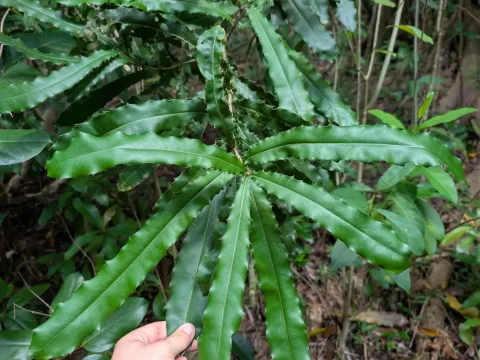
Macadamia tetraphylla
Macadamia tetraphylla L. Johns.
Macadamia tetraphylla, commonly known as the rough-shelled macadamia, belongs to the Proteaceae family. It is an evergreen tree characterized by its distinct serrated leaves arranged in whorls of four, which distinguishes it from other macadamia species.
What the section contains
Macadamia tetraphylla
Native to the subtropical rainforests of eastern Australia, this tree thrives in moderate climates. It is sensitive to extreme frost, especially when young, and prefers temperatures ranging between 18°C and 25°C for optimal growth.
The crop requires deep, fertile, and well-drained soils. A soil pH between 5.5 and 6.5 is ideal to facilitate nutrient uptake. Poor drainage often leads to root rot, making site selection critical for commercial orchards.
Protection from high winds is essential, as the branches of Macadamia tetraphylla can be brittle. Establishing windbreaks around the plantation helps protect the canopy and prevents premature nut drop.
Consistent irrigation is vital, particularly during the flowering and fruit development stages. Efficient water management ensures high productivity and helps the tree withstand seasonal dry spells.
Commercial harvesting typically begins when trees are 6 to 8 years old. Maximum yields are usually reached once the tree reaches maturity, generally between 12 and 15 years of age.
Annual yields per tree fluctuate based on the cultivar and management practices, often ranging from 20 to 50 kilograms of in-shell nuts per tree under ideal conditions.
Harvesting is an ongoing process as nuts ripen and fall from the tree over several weeks. Timely collection is necessary to maintain quality and prevent damage from pests or ground moisture.
Post-harvest processing, including dehulling and drying, is crucial for marketability. Reducing the moisture content of the kernels ensures they reach a stable quality for storage and shipping.
Global demand for macadamia nuts remains strong, providing a significant economic incentive for growers. Investment in proper orchard management significantly improves long-term profitability.
The most serious threat is root rot caused by Phytophthora species. This disease is most prevalent in poorly drained soils and can be mitigated by careful site preparation and irrigation control.
Insect pests, particularly nut borers and various moth species, can damage developing nuts. Integrated pest management strategies, including biological control, are highly recommended to keep populations in check.
Thrips and mites may infest the foliage, leading to reduced photosynthesis and tree stress. Regular scouting and early intervention are necessary to maintain orchard health.
Sanitation is a key component of disease control. Removing infected branches and keeping tools clean prevents the spread of pathogens throughout the orchard during maintenance activities.
- Phytophthora root rot
- Nut borer caterpillars
- Thrips and spider mites
- Anthracnose leaf spot
Nuts are harvested once they naturally fall from the tree. Mechanized harvesters are commonly used in commercial settings to sweep the orchard floor and collect the fallen crop efficiently.
Dehulling should be performed immediately after collection. Leaving the green husk on the nut for too long can lead to staining and a rapid decline in the quality of the kernel inside.
Drying is a multi-stage process designed to bring the kernel to a specific moisture level. This prevents the nuts from becoming rancid and prepares them for the cracking process.
Proper sizing and grading before cracking allow for the efficient operation of mechanical nutcrackers, minimizing the occurrence of broken kernels and maximizing the recovery of whole, high-value nuts.
Storage of the finished kernels must occur in cool, dry, and airtight conditions. This protects the healthy fats within the nut from oxidation and ensures that the final product reaches the consumer fresh.