
Macadamia ternifolia
Macadamia ternifolia F. Muell.
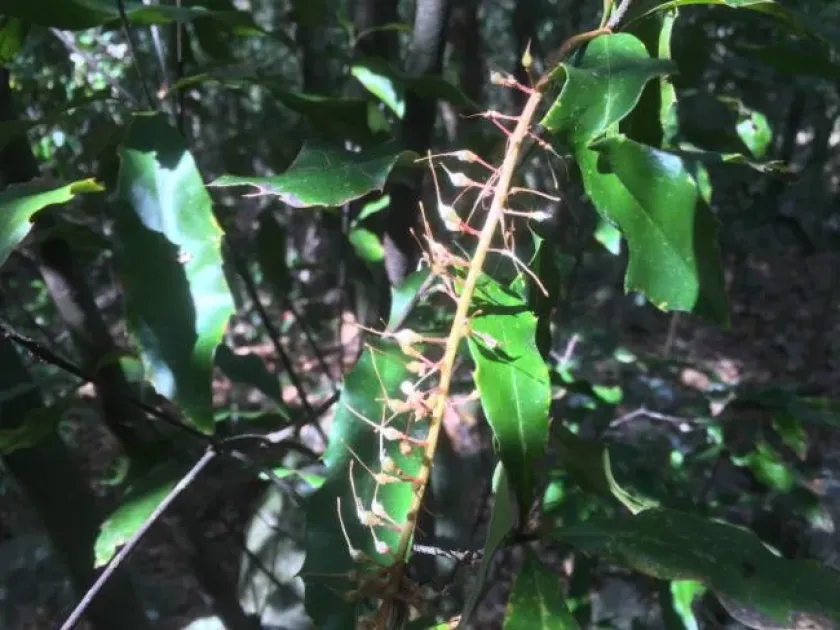
Description
Growing requirements
Macadamia ternifolia, commonly known as the small-fruited Queensland nut, belongs to the Proteaceae family. It is an evergreen species native to the subtropical rainforests of eastern Australia, thriving in warm and humid environments.
The tree requires a climate with temperatures ranging from 18 to 28 degrees Celsius for optimal vegetative growth. It is highly susceptible to frost, making site selection critical for avoiding damage to young trees and loss of yield in commercial settings.
Well-drained, fertile soil is a primary requirement for this crop, with a preferred pH level between 5.5 and 6.5. Avoiding waterlogged areas is essential, as the root system is prone to fungal infections under conditions of poor soil aeration.
The trees need protection from strong, drying winds, which can damage brittle branches and reduce fruit quality. Establishing windbreaks using other vegetation helps maintain a stable microclimate within the orchard.
An annual rainfall of 1000–2000 mm is typically necessary. In areas where precipitation is inconsistent, implementing an irrigation system is vital to support the tree during the flowering and fruit-setting stages of its lifecycle.
Yield
Commercially grown Macadamia ternifolia trees typically begin producing fruit between 5 and 7 years of age. Maximum productivity is usually reached once the orchard matures, typically around the 12th to 15th year.
Yields vary significantly based on variety, tree density, and management practices. A healthy mature orchard can yield between 3 to 5 tons of nuts in shell per hectare annually under optimal conditions.
Cross-pollination is a key factor in ensuring high yields. Growers often plant multiple compatible varieties together to enhance the pollination process, which is primarily facilitated by bees and other insects.
Beyond the food industry, macadamia nuts are highly valued for their oil, which is rich in monounsaturated fats. This oil is a staple ingredient in luxury cosmetic products due to its excellent skin-moisturizing properties.
Regular pruning is necessary to manage tree size and ensure that light reaches the inner canopy. This practice not only improves the overall health of the tree but also increases the size and quality of the nut harvest.
Main diseases and pests
Nut borers and fruit-spotting bugs are significant pests that can severely damage the kernels. Growers utilize pheromone traps and biological monitoring to detect infestations early and minimize the need for broad-spectrum chemical interventions.
Phytophthora root rot is a major disease risk, especially in heavy or poorly drained soils. Preventing this disease relies on strictly controlled irrigation and the maintenance of good soil structure through the use of organic amendments.
Mites and scales can infest leaves and branches, reducing the tree's vigor. Integrated Pest Management (IPM) strategies, which include introducing natural predators, are highly effective in maintaining pest populations below economic thresholds.
Anthracnose may occur during periods of high humidity and rainfall, affecting both flowers and young fruits. Improving air circulation within the orchard and removing infected debris are essential cultural practices for disease control.
Monitoring the orchard's health through regular inspections is key to preventing major outbreaks. Sustainable farming practices, such as balancing nutrients and soil health, build a strong immune system for the trees against common pathogens.
Harvesting
Harvesting Macadamia ternifolia is predominantly based on collecting nuts that have naturally fallen to the ground. This indicates that the nuts have reached physiological maturity and possess the necessary oil content.
Mechanical harvesting is common in large-scale operations, utilizing specialized sweepers and harvesters. This technology streamlines the process, ensuring that the fruit is collected efficiently before it can spoil on the orchard floor.
The fibrous outer husk should be removed as soon as possible after collection, ideally within 24 to 48 hours. Quick de-husking prevents the buildup of heat and moisture, which could otherwise lead to kernel fermentation.
Drying is a critical step in the post-harvest process. Nuts are dried in climate-controlled facilities until the kernel moisture content reaches approximately 1.5%, which ensures long-term stability and quality during shipping.
After processing, the nuts are graded by size and quality before storage. Proper storage in cool, dry, and rodent-proof environments ensures that the nuts retain their nutritional value and freshness for the final consumer.