
Mimetes
Mimetes Salisb.
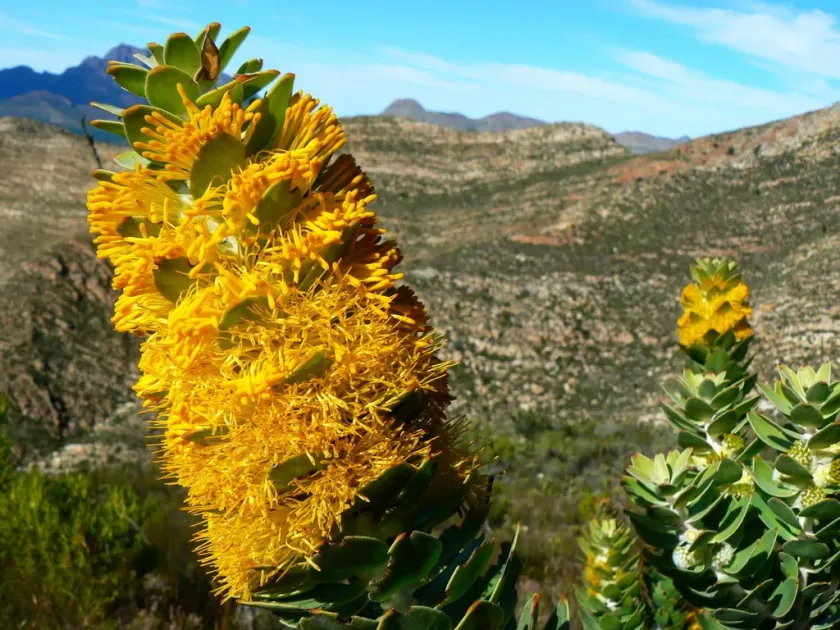
Description
Sowing dates
Mimetes, belonging to the Proteaceae family, is a demanding genus that typically requires specialized propagation methods, often starting from seeds in controlled greenhouse conditions.
Sowing should ideally occur in late autumn or early winter, allowing seeds to experience the natural fluctuations in temperature that trigger successful germination.
Optimal germination requires a distinct diurnal temperature range, with daytime highs around 20–25°C and nighttime lows dropping to 10–12°C, mimicking the South African fynbos environment.
The substrate used for seeding must be nutrient-poor, acidic (pH 5.0–5.5), and possess exceptional drainage capabilities to avoid any risk of seed rot.
Seedlings develop quite slowly and require intense light; thus, supplementary lighting is recommended during the winter months to prevent etiolation and ensure sturdy plant growth.
Growing requirements
As an endemic of the Cape Floristic Region, Mimetes thrives in a Mediterranean climate, characterized by cool, wet winters and warm, dry, arid summers.
These plants are highly light-demanding and require full sun exposure throughout the day to maintain their structural integrity and vibrant foliage coloration.
Soil requirements are strict: the medium must be sandy, rocky, and phosphorus-free, as Proteaceae species have specialized root structures that are extremely sensitive to phosphorus levels.
Regular but cautious watering is vital; the soil should remain moist but never waterlogged, as poor drainage is the primary cause of sudden plant mortality in this genus.
Adequate air circulation is necessary in greenhouse cultivation to maintain lower humidity levels around the canopy and prevent the onset of fungal diseases.
Yield
The economic value of Mimetes is primarily tied to the floral industry, where its unique, candle-like inflorescences are sought after for high-end arrangements.
Productivity is heavily managed through precision pruning techniques, which encourage the development of new, high-quality lateral stems for future harvest seasons.
Commercial growers focus on producing long, rigid stems covered in attractive, leathery leaves, aiming for uniform quality across the entire plantation block.
The harvest cycle usually matures by the third or fourth year, with production capacity remaining stable if the plants are maintained in their preferred, low-nutrient environment.
A healthy plant can remain productive for up to a decade, provided it is protected from soil-borne pathogens and given appropriate space for root development.
Main diseases and pests
Soil-borne pathogens, specifically Phytophthora fungi, represent the most critical threat to Mimetes, often wiping out entire sections of a crop due to drainage errors.
Root rot progresses silently and rapidly, often manifesting above ground only when the plant is beyond recovery, making preventative soil treatment essential.
Pests such as scale insects and mealybugs frequently hide within the dense, tough leaf clusters, requiring thorough and repeated scouting to ensure effective control.
Spider mites can become a major nuisance during periods of extreme heat and low humidity, causing premature foliage drop and disfiguration of the stems.
Chemical control must be applied with caution, as the waxy cuticle of the leaves can be sensitive to certain carriers or oil-based pesticides used in common formulas.
Harvesting
Harvesting is performed by hand when the bracts show mature color and the inner florets begin to open, ensuring the longest possible vase life for the consumer.
Stems must be placed into clean water immediately after cutting, ideally containing professional floral preservatives to maintain vascular flow and hydration.
Care must be taken during the harvesting process to prune the stems correctly, ensuring that sufficient foliage remains on the plant to support future vegetative growth.
Post-harvest handling involves sorting by stem length and color intensity, followed by a mandatory pre-cooling phase to stabilize the flowers for further distribution.
Storage at 2–5°C is recommended to slow down the metabolic processes, ensuring that the Mimetes arrive at the market in peak condition for floral designers.