
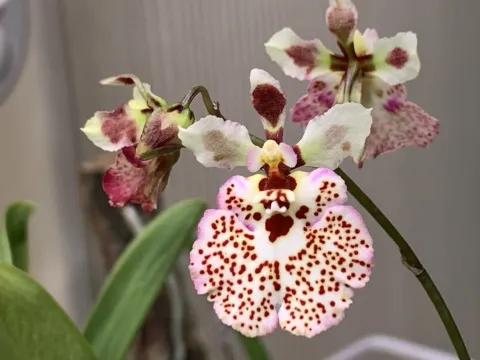
Tolumnia
Tolumnia
Tolumnia is a genus of small, epiphytic orchids within the Orchidaceae family. Native to the Caribbean islands, these plants have evolved to colonize tree branches, surviving in high-light, high-ventilation environments with frequent but brief moisture exposure.
What the section contains


Tolumnia
The plant exhibits a fan-like growth habit with succulent, often spotted leaves. Unlike sympodial orchids with large pseudobulbs, Tolumnia relies on a complex root system that requires significant airflow and immediate drainage to avoid fungal colonization.
For successful cultivation, temperatures should range between 18°C and 28°C. They require significant light intensity to trigger blooming; however, direct midday sun should be avoided to prevent leaf necrosis. Moderate light levels help maintain compact growth.
Cultural requirements emphasize the need for a very loose substrate or bare-root mounting. Using bark, charcoal, or specialized orchid mesh is essential. The medium must dry out completely between waterings to simulate the natural epiphyte environment.
Water quality is a critical factor for Tolumnia management. The use of low-mineral content water is vital, as excessive salts quickly build up in the root zone, causing root tip burn and overall physiological stress to the plant.
Common pests affecting Tolumnia include spider mites, which thrive in dry indoor conditions, and scale insects that cluster under leaves or near the base. Regular inspection is necessary to manage these populations before they cause significant damage.
Root and crown rot are the primary threats, typically induced by poor drainage, overly damp media, or stagnant air. These conditions foster bacterial and fungal growth, which can destroy the delicate root system of the orchid in a very short timeframe.
Cultural prevention remains the best defense. Maintaining a high level of air movement around the leaves and root system is mandatory. Avoiding overhead watering reduces the risk of water accumulation in the leaf axils, preventing secondary infections.
In case of pest infestation, the use of mild horticultural oils or systemic insecticides is recommended. If fungal symptoms emerge, the affected plant should be treated with appropriate fungicides and moved to a drier, better-ventilated location immediately.
Finally, avoid excessive fertilizer usage. Tolumnia is highly sensitive to salt accumulation; therefore, a weak solution applied during the growing season is sufficient, followed by periodic flushing of the substrate to ensure long-term plant health.