
Tolumnia bahamensis
Tolumnia bahamensis
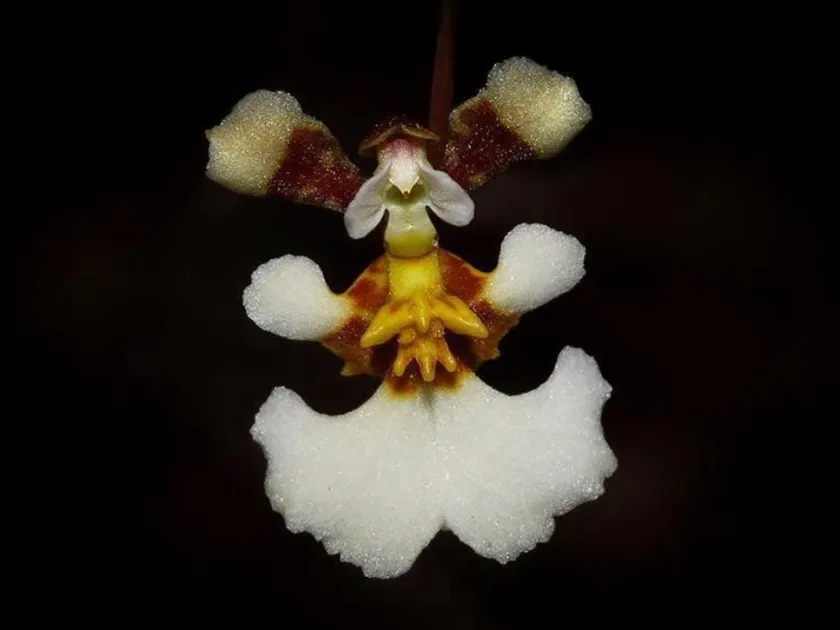
Description
Growing requirements
Tolumnia bahamensis is a distinct species of epiphytic orchid belonging to the Orchidaceae family. Native to the Bahamas and parts of Florida, this plant has adapted to tropical coastal climates, where it grows attached to tree branches, thriving in high-humidity environments with constant air movement.
Botanical characteristics of this species include a compact rosette of succulent, fan-shaped leaves and delicate, arching inflorescences. Unlike many other orchids, this species lacks large pseudobulbs, relying instead on its thick leaves to store water and nutrients during brief dry spells.
Climate requirements for Tolumnia bahamensis involve bright, filtered light and warm temperatures. Direct sunlight must be avoided, as it can cause severe scorching of the leaves, while insufficient light inhibits the plant's ability to produce flowers, which are typically small, intricate, and vividly colored.
Soil and substrate requirements are minimal; in fact, the plant prefers to be mounted on driftwood or cork slabs to ensure optimal drainage. If grown in pots, a very airy, coarse bark-based substrate is essential, as the roots require significant oxygen and must dry out rapidly after each watering.
Effective agrotechnology for this species emphasizes a rhythmic watering schedule. It is vital to ensure that the roots do not remain wet for extended periods, as this is the primary cause of root failure. Frequent misting combined with high daytime temperatures helps mimic the natural environment of this orchid.
Main diseases and pests
The most common threats to Tolumnia bahamensis are fungal and bacterial infections caused by overwatering or stagnant air. When moisture accumulates in the leaf axils or the substrate, it creates an environment conducive to rot, which can quickly destroy the plant's root system.
Pests such as scale insects and mealybugs are major concerns for growers. These pests hide in the crevices of the leaf rosettes, feeding on the plant's juices. If left untreated, they can cause stunted growth, leaf deformation, and the spread of secondary viral or fungal infections.
Spider mites represent a significant risk, particularly in indoor environments with low humidity. They manifest as fine webbing and tiny spots on the leaves, eventually leading to chlorosis and tissue necrosis if the infestation is not managed through increased humidity and appropriate miticides.
Preventative care is crucial and includes maintaining good air circulation around the plants. Avoiding overhead watering in the evenings is a standard practice to reduce the risk of leaf spotting and bacterial rot, which are exacerbated by cool, damp nights.
Regular inspection is the best defense against threats. By examining the undersides of the leaves and the base of the plant during routine maintenance, growers can identify and address pest outbreaks or early signs of disease before they threaten the viability of the entire orchid specimen.