
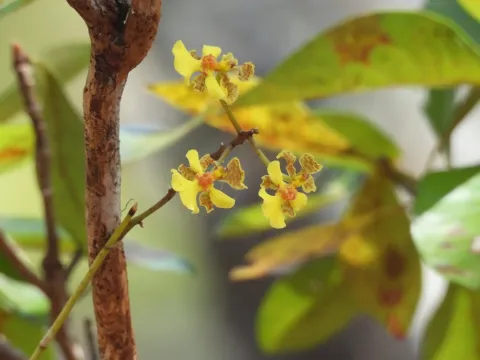
Trichocentrum
Trichocentrum
Trichocentrum is a genus of perennial epiphytic plants belonging to the Orchidaceae family. In their natural habitat, these plants are found in the tropical forests of Central and South America, thriving in humid environments at elevations ranging from 50 to 1500 meters above sea level.
What the section contains
 Trichocentrum candidum
Trichocentrum candidum
Trichocentrum candidum
 Trichocentrum carthagenense
Trichocentrum carthagenense
Trichocentrum carthagenense
 Trichocentrum cebolleta
Trichocentrum cebolleta
Trichocentrum cebolleta
 Trichocentrum lanceanum
Trichocentrum lanceanum
Trichocentrum lanceanum
 Trichocentrum stramineum
Trichocentrum stramineum
Trichocentrum stramineum
 Trichocentrum tigrinum
Trichocentrum tigrinum
Trichocentrum tigrinum
 Trichocentrum undulatum
Trichocentrum undulatum
Trichocentrum undulatum
Trichocentrum
The culture is characterized by a compact sympodial growth habit with short rhizomes. Most species feature small pseudobulbs clustered tightly together, from which single, rather fleshy or leathery leaves emerge, often displaying distinct mottled patterns.
Successful cultivation of Trichocentrum requires stable environmental conditions with excellent air circulation. The ideal temperature range is between 18 and 24 degrees Celsius during the day, with a mandatory night drop of 5–7 degrees to stimulate healthy development and blooming.
A critical factor is the choice of substrate, which must provide rapid water drainage and superior aeration for the root system. It is best to use a mixture of coniferous bark, charcoal, and sphagnum moss, maintaining moderate moisture levels without allowing water to stagnate in the pot.
The plant is light-loving but requires protection from direct midday sun, which can cause severe leaf scorch. In both commercial and amateur horticulture, Trichocentrum is highly valued for its striking and often fragrant flowers, which resemble "mule ears," a hallmark feature of the genus.
Common pests affecting this orchid include scale insects and spider mites, which typically target the plant when indoor humidity levels are poorly managed. If pests are detected, the immediate application of systemic insecticides and acaricides is necessary to prevent damage.
Fungal and bacterial rots pose a significant threat during periods of overwatering or inadequate air movement. To ensure plant health, avoid getting water into the leaf axils and maintain a strict watering schedule during the winter dormant phase.