
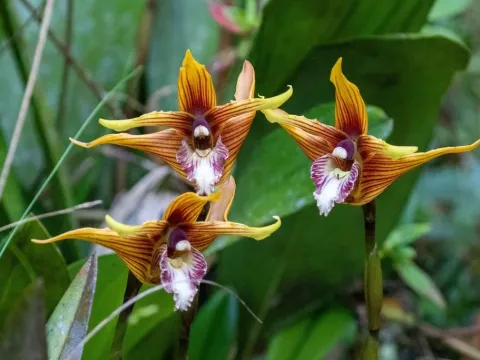
Maxillaria
Maxillaria
Maxillaria is a diverse genus of epiphytic and terrestrial plants belonging to the Orchidaceae family. These plants are native to the tropical and subtropical regions of the Americas, thriving in diverse environments ranging from sea-level coastal forests to high-altitude cloud forests.
What the section contains
 Maxillaria acutifolia
Maxillaria acutifolia
Maxillaria acutifolia
 Maxillaria adendrobium
Maxillaria albata
Maxillaria albata
Maxillaria adendrobium
Maxillaria adendrobium
Maxillaria albata
Maxillaria albata
 Maxillaria cerifera
Maxillaria cerifera
Maxillaria cerifera
 Maxillaria coccinea
Maxillaria coccinea
Maxillaria coccinea
 Maxillaria crassifolia
Maxillaria crassifolia
Maxillaria crassifolia
 Maxillaria equitans
Maxillaria equitans
Maxillaria equitans
 Maxillaria humilis
Maxillaria humilis
Maxillaria humilis
 Maxillaria luteoalba
Maxillaria luteoalba
Maxillaria luteoalba
 Maxillaria lutescens
Maxillaria lutescens
Maxillaria lutescens
 Maxillaria palmifolia
Maxillaria palmifolia
Maxillaria palmifolia
 Maxillaria plicata
Maxillaria plicata
Maxillaria plicata
 Maxillaria purpurea
Maxillaria purpurea
Maxillaria purpurea
 Maxillaria schunkeana
Maxillaria schunkeana
Maxillaria schunkeana
 Maxillaria setigera
Maxillaria setigera
Maxillaria setigera
 Maxillaria subulata
Maxillaria subulata
Maxillaria subulata
 Maxillaria tenuifolia
Maxillaria tenuifolia
Maxillaria tenuifolia
 Maxillaria tenuis
Maxillaria tenuis
Maxillaria tenuis
 Maxillaria thurstoniorum
Maxillaria thurstoniorum
Maxillaria thurstoniorum
 Maxillaria valenzuelana
Maxillaria valenzuelana
Maxillaria valenzuelana
 Maxillaria variabilis
Maxillaria variabilis
Maxillaria variabilis
Maxillaria
Botanically, they are characterized by a sympodial growth habit, featuring distinct pseudobulbs that store water and nutrients. Their root systems are highly specialized to capture moisture and minerals from the air and rain, typical of epiphytic species that grow on tree branches.
Optimal cultivation requires a carefully managed climate, as most species prefer cool to intermediate temperatures. A significant diurnal temperature fluctuation, where nights are cooler than days, is essential for healthy vegetative development and consistent blooming.
The substrate must be highly porous to ensure rapid drainage and air circulation around the roots. Common horticultural practices involve using a mix of pine bark, perlite, and sphagnum moss to balance moisture retention with the necessary aeration requirements.
In terms of economic use, Maxillaria is widely cultivated in the ornamental horticulture industry. It is highly valued for its striking flower shapes and the intense, often pleasant scents produced by many species, making it a staple in orchid collections and botanical gardens.
The primary threats to Maxillaria are physiological disorders stemming from improper watering and inadequate airflow. Overwatering, especially during cooler periods, significantly increases the risk of root and pseudobulb rot caused by water-borne fungi.
Pest infestations, particularly by scale insects, pose a serious challenge. These pests attach themselves to the undersides of leaves and the base of pseudobulbs, draining plant nutrients and weakening the overall vigor of the orchid.
Spider mites are another frequent problem, thriving in environments with low relative humidity. Their presence is usually signaled by the appearance of fine webbing and stippling on the leaves, which requires immediate intervention with acaricides.
Mealybugs are also common, often hiding in crevices between leaves where they are difficult to reach with standard contact insecticides. Regular monitoring and the application of systemic treatments are recommended to keep populations under control.
Effective management includes regular repotting to replace decomposed substrate, which prevents the build-up of salts and anaerobic bacteria. Maintaining high hygiene standards in the growing area helps minimize the risk of recurring infestations and disease outbreaks.