
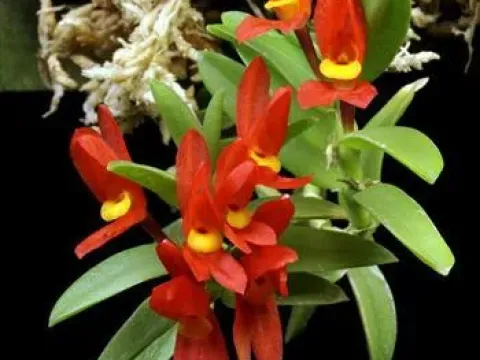
Fernandezia
Fernandezia
Fernandezia is a genus of epiphytic orchids belonging to the Orchidaceae family. These plants are native to the tropical forests of Central and South America, typically found in high-altitude environments where they grow on tree trunks and branches under misty conditions.
What the section contains

Fernandezia
Botanically, these orchids are known for their sympodial growth habit and unique, fan-like stems covered in small, overlapping leaves. Their flowers are often small, vibrant in color, and appear in clusters, making them highly desirable specimens for specialized orchid collections and botanical gardens.
Cultivation requires strict adherence to environmental conditions, particularly high air humidity levels and moderate temperatures. The plants thrive when exposed to distinct day and night temperature fluctuations, which mimic their natural highland habitats and are essential for successful blooming.
The potting medium must be well-draining, consisting of a mix of bark, perlite, and sphagnum moss. Proper aeration of the root system is critical, as stagnant moisture can cause rapid decay. Ensuring the orchid is grown in a basket or a pot with numerous drainage holes is highly recommended.
Fernandezia is cultivated primarily for ornamental purposes. Due to its specific physiological requirements, it is considered a plant for experienced hobbyists who can provide consistent care, high light levels without direct burning, and high-quality water to prevent salt buildup.
The most common health issues for Fernandezia involve root and stem rots caused by overwatering or poor ventilation. If the substrate remains too soggy, pathogenic fungi can quickly destroy the plant, starting from the roots and spreading upwards to the sensitive foliage.
Pests such as spider mites, scale insects, and mealybugs are the primary threats. These pests often congregate in the tight spaces between the overlapping leaves, where they are shielded from physical removal and topical treatments, leading to stunted growth.
To combat fungal pathogens, systemic fungicides formulated for delicate plants should be used. It is vital to ensure that the treatment does not contain harsh chemicals that might cause phytotoxicity to the orchid leaves, and always maintain air circulation after application.
In the event of pest infestation, a combination of mechanical removal and appropriate insecticides or horticultural soaps is necessary. Frequent inspection of the stem base and leaf axils is crucial for early detection and mitigation of the damage caused by these insects.
Water quality management is a vital aspect of preventive care. Using mineral-rich or hard water can lead to salt accumulation in the potting medium, which acts as a stressor and makes the plant more susceptible to diseases and pest attacks over time.