
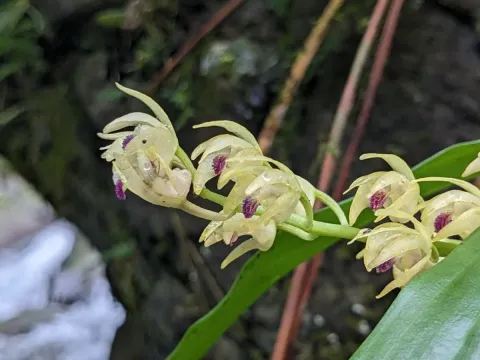
Eria
Eria
Propagation of Eria is typically achieved through division of mature clumps. The best time for this procedure is immediately after the flowering cycle, as the plant begins its new growth phase.
What the section contains


Eria
Seed propagation is extremely challenging and limited to laboratory environments. Because orchid seeds lack nutrient reserves, they must be germinated on sterile agar media often enriched with fungal endophytes to support embryo development.
When dividing the plant, use sterilized tools to minimize the risk of pathogen transmission. Ensure each section contains at least three to four healthy pseudobulbs to provide sufficient energy for independent growth.
After division, the cut surfaces should be treated with charcoal powder to act as a desiccant and antiseptic. This significantly reduces the risk of tissue rotting during the initial recovery period.
Newly divided plants should be kept in a stable environment with high humidity and protected from direct sunlight until new roots have clearly established themselves in the fresh potting mix.
Eria is a diverse genus within the Orchidaceae family, natively found in tropical Asian forests. As an epiphyte, it requires an environment that ensures good aeration around the root system while maintaining high ambient humidity.
Light requirements are generally moderate; the plants thrive in bright, indirect light. Intense direct sunlight can easily scorch the foliage, while insufficient light leads to stunted growth and a failure to produce blooms.
The substrate must be extremely porous. A blend of fir bark, charcoal, and perlite or sphagnum moss is ideal. Avoid using garden soil, as it suffocates the roots and leads to rapid decay of the plant's sensitive vascular system.
Watering should be frequent during the active growing season, but the substrate must be allowed to dry slightly between sessions. Proper drainage is mandatory to prevent water from accumulating around the base of the pseudobulbs.
Temperature maintenance is critical for Eria. While most species prefer intermediate temperatures, a slight drop at night can act as a trigger for flower spike initiation, mimicking the natural conditions of their high-altitude habitats.
Fungal infections, particularly root rot, are the most common threats to Eria. These issues are almost exclusively caused by overwatering or inadequate air circulation, which prevents the substrate from drying out properly.
Pests such as spider mites and scale insects often target Eria. These insects feed on the plant's sap, weakening the structure and leaving behind sticky residues that can further encourage the growth of sooty mold.
Early detection is vital for pest management. Regular inspections of the undersides of leaves and the junction between leaves and pseudobulbs can prevent major infestations that are harder to treat.
Chemical control using systemic pesticides is effective against scale, but manual removal with an alcohol-soaked swab is often sufficient for small, early-stage infestations.
Maintaining a clean growing area and discarding contaminated potting material are essential preventive measures to ensure the long-term health and vitality of your orchid collection.