
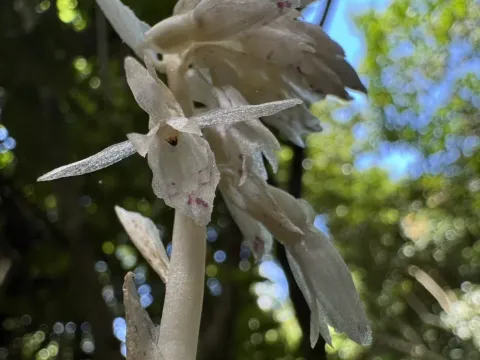
Epipogium
Epipogium
Epipogium, commonly known as the ghost orchid or saprophytic orchid, is a fascinating genus within the Orchidaceae family. It is a strictly mycoheterotrophic plant, meaning it relies entirely on a symbiotic relationship with fungi for carbon and nutrients rather than photosynthesis.
What the section contains


Epipogium
In terms of agriculture, Epipogium is not a crop. It has no history of commercial cultivation or domestication, as it requires highly specific, intact fungal networks present only in mature, undisturbed forest ecosystems across Eurasia.
The plant has extreme requirements for its soil environment. It demands a deep, undisturbed layer of leaf litter and decaying organic matter that hosts the exact fungal species needed for its development. Changes to the soil structure result in immediate population decline.
Climate preferences for Epipogium are defined by cool, moist, and shaded forest environments. It thrives in conditions where the air humidity remains high, and the temperature is shielded from extreme fluctuations by a dense tree canopy.
There is no known agronomic technique to replicate the habitat of Epipogium. Attempts to propagate this genus under controlled or field conditions have historically failed due to the complex and specialized underground symbiotic processes that science is still struggling to fully understand.
The primary threats to Epipogium are habitat fragmentation and destruction. Logging, deforestation, and soil compaction destroy the delicate mycorrhizal associations that the plant relies on to survive, making it an indicator species for forest health.
Epipogium does not face typical agricultural pests or diseases because it is not a part of any farming system. However, the introduction of non-native fungal pathogens or soil pollutants can disrupt its fragile connection to host fungi, leading to localized extinction.
Human interference, such as recreational trampling or the removal of forest ground cover, poses a severe threat. Because the plant remains underground for most of its life cycle, it is incredibly vulnerable during its short flowering period when it is visible above ground.
Competition from invasive plant species can shift the forest floor microbiology, effectively starving the Epipogium by replacing the beneficial fungal species it depends upon. This indirect competition is a major factor in the rarity of the plant.
As a non-cultivated, ecologically sensitive plant, its survival depends solely on forest preservation. There are no chemical or physical control methods to support its growth, as its life cycle is entirely governed by biological interactions with soil microorganisms.