
Coryanthes maculata
Coryanthes maculata
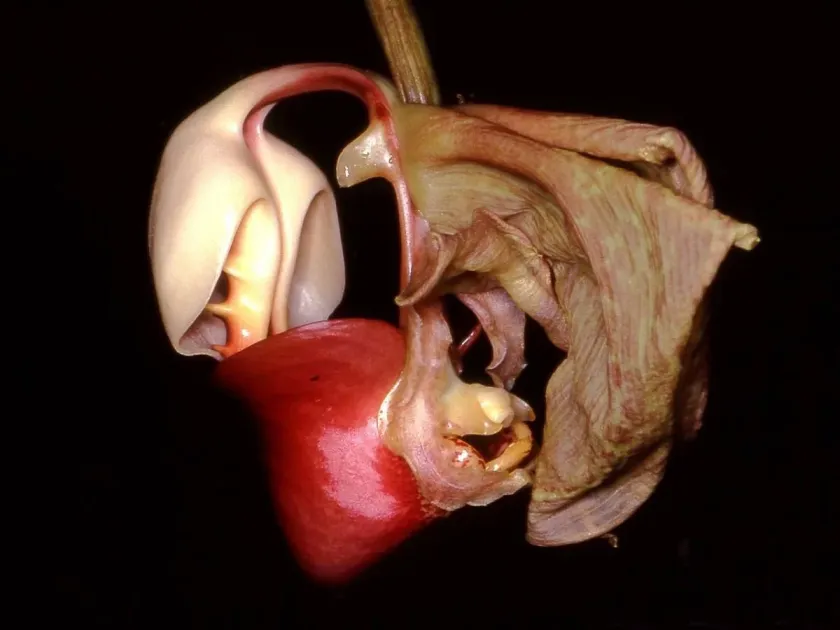
Description
Growing requirements
Coryanthes maculata belongs to the Orchidaceae family and is an epiphyte native to the tropical forests of South America. It is widely recognized for its extraordinary flower morphology, which acts as a bucket-like trap to facilitate specific pollination mechanisms by euglossine bees.
Successful commercial cultivation requires a tropical climate with temperatures ranging from 22°C to 28°C. Providing a stable environment is essential to ensure the healthy development of the pseudobulbs, which act as water and nutrient storage organs for the plant.
The substrate must provide excellent drainage and aeration. A common potting mix includes large pieces of fir bark, charcoal, and long-fibered sphagnum moss. Ensuring the roots are never waterlogged is the primary goal of the watering regime in professional greenhouses.
High relative humidity, typically exceeding 70%, is mandatory for this species. Growers often use automated misting systems and internal air circulation fans to prevent the development of stagnant air zones, which can foster fungal growth on the leaves and roots.
The plant thrives under bright, filtered light conditions. Direct sunlight exposure should be avoided to prevent chlorophyll damage and leaf scorching, especially during the peak midday hours, making artificial shading a standard tool in greenhouse production.
Main diseases and pests
The main threats to Coryanthes maculata include common greenhouse pests such as spider mites, scale insects, and aphids. Integrated pest management strategies, including the use of biological control agents or targeted miticides, are recommended to maintain plant vigor.
Bacterial and fungal infections, particularly those affecting the root system, are significant risks. Proper sanitation protocols, including the sterilization of tools and pots, are necessary to prevent the spread of diseases within the cultivation facility.