
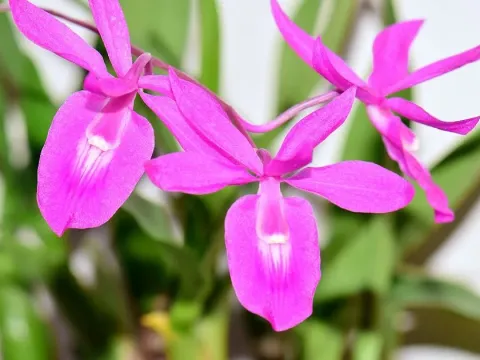
Barkeria
Barkeria
Barkeria is a genus of epiphytic plants belonging to the Orchidaceae family. Native to Mexico and Central America, these orchids have adapted to life in tropical forests, where they thrive in high-altitude environments attached to tree branches.
What the section contains

Barkeria
The cultural requirements for Barkeria focus heavily on bright, indirect light. These plants require significant illumination to produce robust pseudobulbs, which are essential for successful flowering in the subsequent season.
Temperature management is critical for the growth cycle. During the growing season, they prefer daytime temperatures between 22°C and 28°C, while a cooler rest period at night is necessary to stimulate the dormant buds.
Proper aeration of the root system is mandatory. Because they are epiphytes, Barkeria plants should never be kept in dense, moisture-retentive potting mixes. Coarse bark chips or mounting on cork slabs are preferred methods.
Watering frequency should be adjusted seasonally. In the wild, these orchids experience a dry rest period; therefore, reducing water during the dormant phase prevents root rotting and ensures the plant remains healthy.
Fungal rots are the most significant threat to the Barkeria genus. These are typically caused by stagnant air and water sitting in the crown or around the pseudobulbs for extended periods.
Mealybugs represent a common pest threat. These small insects tend to hide in crevices, where they suck sap from the plant. Manual removal combined with systemic insecticides is effective for management.
Scale insects can damage the epidermis of the leaves and stems. Their hard shells provide protection, making regular monitoring and immediate application of contact pesticides necessary during an outbreak.
Spider mites can occur if the humidity levels drop significantly. These pests are notoriously difficult to see but can quickly cause chlorosis, giving leaves a stippled, unhealthy appearance.
Bacterial soft rot can spread rapidly in warm, humid conditions. It is characterized by a foul odor and mushy texture. Affected areas should be cut away with sterilized tools, followed by treating the plant with a fungicide.