
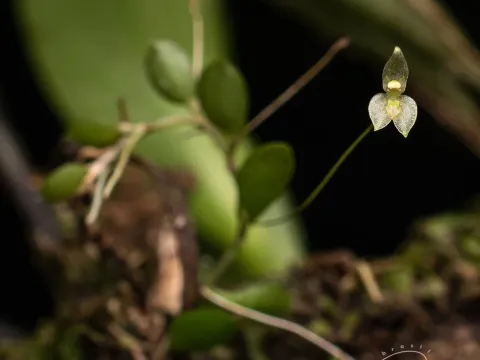
Barbosella
Barbosella
Barbosella is a genus of miniature epiphytic orchids belonging to the Orchidaceae family. These plants are native to the tropical forests of Central and South America, where they typically thrive in cool, moist, and cloudy mountain environments.
What the section contains

Barbosella
Successful cultivation of Barbosella requires a strictly controlled environment. High humidity, ideally between 70% and 80%, is essential for the plant to remain healthy and vibrant throughout the year.
The ideal temperature range for Barbosella is moderate, between 15°C and 22°C. These orchids are highly sensitive to extreme heat, which can lead to rapid deterioration of their delicate foliage and root systems.
Due to their epiphytic nature, these plants should not be grown in traditional pots with soil. Instead, they thrive when mounted on bark slabs, tree fern fiber, or cork, which allows their roots to receive proper aeration.
Light levels should be bright but diffused. Direct sunlight is harmful and will cause leaf scorching within a short period. Providing consistent air movement is equally important to mimic the natural breezy conditions of their native habitat.
Spider mites are the most common pests affecting Barbosella, especially when the surrounding air becomes too dry. Keeping humidity levels consistent and providing good ventilation significantly reduces the risk of infestation.
Excess moisture combined with poor airflow often leads to fungal and bacterial rot. It is critical to ensure the foliage and roots dry out appropriately after watering to prevent the development of these pathogens.
Scale insects can occasionally infest the plants, hiding in the leaf axils. Frequent inspections are necessary to catch these pests early before they colonize the entire plant, which can be difficult to treat.
Poor water quality, particularly water high in mineral salts, can damage the roots. Using soft, purified, or reverse osmosis water is recommended to avoid chemical buildup on the mounting substrate.
Good hygiene practices, such as disinfecting tools before trimming or adjusting the plant, are vital. Isolating new specimens before introducing them to an existing collection helps prevent the spread of diseases and pests.