
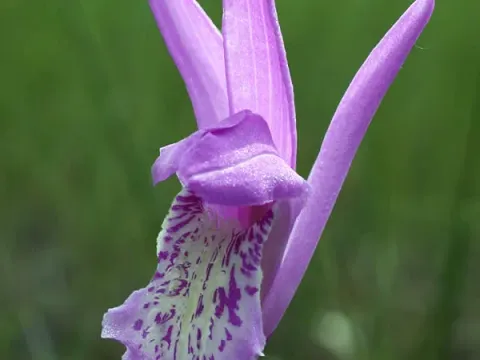
Arethusa
Arethusa
Arethusa bulbosa, commonly known as the Dragon's Mouth orchid, is a monotypic genus belonging to the Orchidaceae family. The plant is highly specialized and relies on mycorrhizal fungi for germination in the wild.
What the section contains

Arethusa
Propagation in a professional nursery setting is primarily conducted via tissue culture (in vitro) or careful division of the pseudobulbs during the plant's dormant stage.
The ideal time for division is early spring, just before the new shoots emerge, allowing the plant to establish itself in the new substrate before the peak heat of summer.
When transplanting, it is crucial to handle the root system with extreme care, as the delicate roots are easily damaged by physical pressure or rapid moisture changes.
Successful establishment requires a substrate mixture consisting of peat, sand, and sphagnum moss to ensure appropriate moisture retention and gas exchange.
Arethusa thrives in acidic, boggy environments with a pH range between 4.0 and 5.5. It is extremely sensitive to fertilizers, which can quickly lead to root burn and plant failure.
The species requires high humidity and consistent moisture levels, yet it demands excellent drainage to prevent root suffocation in a waterlogged anaerobic environment.
Regarding light, this plant prefers bright, indirect sunlight. Exposure to harsh, direct sunlight often causes rapid desiccation of the thin, grass-like leaves.
The temperature range should remain moderate throughout the growing season. Excessive heat during the summer months is a major limiting factor for successful growth.
Water quality is critical; the use of distilled or rainwater is mandatory, as tap water with high mineral content can alter the pH balance of the growing medium.
Fungal infections, particularly root rot (Fusarium and Pythium), pose the greatest risk to the plant's health, often triggered by poor ventilation or excessively warm conditions.
Pests such as aphids and spider mites can infest the developing floral stalks, necessitating early intervention with mild, organic-approved pest control measures.
Competition from aggressive weeds in non-sterile growing media can inhibit growth, requiring frequent monitoring and manual weeding of the immediate substrate surface.
Environmental stress, such as sudden shifts in humidity, can lead to the premature senescence of the foliage and depletion of the plant's stored energy reserves.
Slugs and snails are major predators in outdoor collections and must be managed through preventative barriers to protect the tender annual growth of the orchid.