
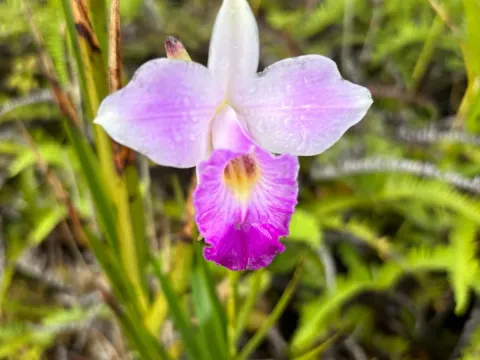
Arundina
Arundina
Arundina, commonly referred to as the bamboo orchid, belongs to the Orchidaceae family. It is a perennial terrestrial herbaceous plant native to the tropical regions of Southeast Asia, where it typically thrives in grasslands and clearings.
What the section contains

Arundina
The climate requirements for Arundina involve high temperatures and consistent humidity. The plant grows best in tropical environments with temperatures ranging from 20 to 30 degrees Celsius, and it does not tolerate frost or cold drafts.
Soil conditions must focus on excellent drainage and aeration. A substrate consisting of orchid bark, perlite, and organic peat provides the ideal environment for the roots, preventing suffocation and promoting healthy growth cycles.
Light intensity is a critical factor for successful cultivation. Arundina requires bright, indirect light or filtered full sun to produce strong, bamboo-like stems and to trigger its characteristic flowering response throughout the season.
Cultivation practices involve a balanced regimen of irrigation. While the plant loves water, it is essential to ensure that the substrate is not waterlogged, as this can quickly lead to root stress and decline.
The primary pests affecting Arundina include spider mites, which thrive in low-humidity environments. These pests damage foliage and can lead to the overall weakening of the plant if not managed promptly with miticides.
Mealybugs are another common threat, often settling in the junctions where leaves meet the stem. Manual removal or the application of horticultural oils is recommended to keep populations in check without damaging the plant.
Fungal pathogens, such as leaf spot, are prevalent in poorly ventilated greenhouse conditions. Maintaining good air circulation is key to preventing spores from germinating on the leaf surface.
Root rot, often caused by overwatering or compacted soil, represents the most significant threat to the survival of the plant. If rot occurs, immediate repotting into fresh, airy media is required to save the specimen.
To maintain a healthy crop, growers should implement a systematic Integrated Pest Management (IPM) program that includes periodic scouting and the use of organic control methods before resorting to heavy chemical interventions.