
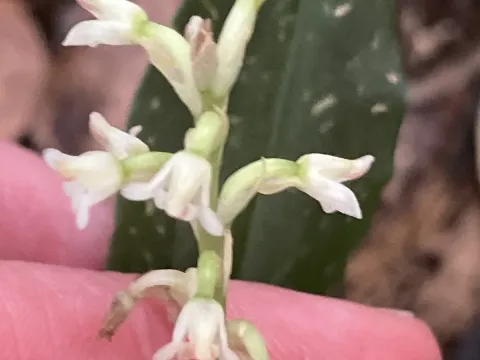
Aspidogyne
Aspidogyne
Aspidogyne belongs to the Orchidaceae family and is a genus of terrestrial plants. In the wild, they grow primarily in the tropical forests of Central and South America, preferring environments with high humidity and diffused light.
What the section contains


Aspidogyne
For successful cultivation of Aspidogyne, a loose, moisture-retaining, yet well-drained substrate is required. An ideal base is a mix of coconut fiber, charcoal, sphagnum moss, and a small amount of conifer bark.
The plant is highly sensitive to irrigation regimes: it cannot tolerate standing water in the roots, which quickly triggers rot. Watering should be regular, based on the drying of the top layer of the substrate, using soft, room-temperature water.
The temperature regime must be stable, between 20–25 degrees Celsius during the day. It is important to avoid sharp temperature fluctuations and cold drafts, which have a extremely negative impact on leaf development and root system.
Aspidogyne prefers diffused light; direct sunlight causes burns on the leaves. It is optimal to place plants on west or east-facing windows, providing supplemental artificial lighting during the winter if necessary.
The main threats to growing Aspidogyne are fungal and bacterial infections, which develop due to excessive humidity and poor air ventilation.
Typical pests for this genus of orchids include spider mites and mealybugs. They infest young shoots and the undersides of leaves, sucking sap and stunting the plant's growth.
To prevent the spread of pests, regular visual inspections of the plants and strict adherence to quarantine measures when introducing new specimens to the collection are recommended.
In case of fungal disease, it is necessary to immediately remove the damaged parts of the plant and apply a broad-spectrum fungicide suitable for orchids.
Regular ventilation of the room where the crop is kept significantly reduces the risk of pathogenic microflora and helps maintain the plant's overall health and immunity.