
Blackberry lily
Iris domestica Goldblatt & Mabb.
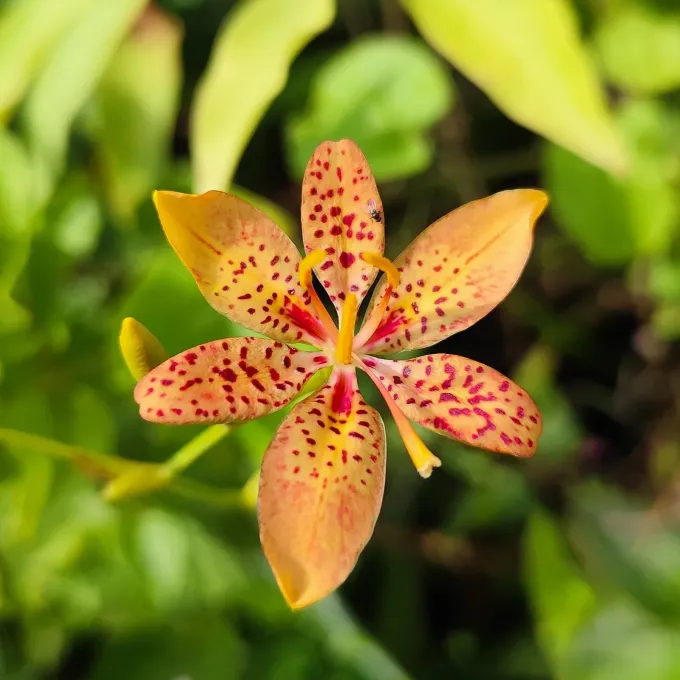
Description
Sowing dates
The propagation of the Blackberry lily, botanically known as Iris domestica, is primarily achieved through seeds. In temperate zones, sowing should begin indoors in late February or early March to ensure the plants are robust enough for transplanting.
Seeds benefit significantly from a period of cold stratification, lasting approximately 4 to 6 weeks at temperatures near 4 degrees Celsius. This mimics natural winter conditions and substantially increases germination rates.
Once the danger of frost has passed, usually by late May, the seedlings can be hardened off and planted into the garden. They prefer a sunny, sheltered location with well-draining soil to establish a strong root system during their first growing season.
Alternatively, the plant can be propagated by rhizome division. This is best done in early spring as soon as growth resumes, or in late autumn after the foliage has died back, ensuring each division contains healthy roots and buds.
When sowing directly outdoors in warmer climates, seeds should be sown in autumn. This allows for natural germination in the spring, which typically results in stronger plants that are better adapted to their specific local environment.
Growing requirements
Iris domestica thrives in full sun exposure, which is essential for healthy foliage development and prolific flowering. While it can tolerate partial shade, insufficient light often results in elongated stems and diminished bloom production.
The soil requirements focus on high fertility and excellent drainage. The species is susceptible to root rot if waterlogged, so gardeners should amend heavy soils with organic matter or sand to improve porosity and prevent moisture accumulation.
Watering should be consistent throughout the active growing period. While the plant is somewhat drought-tolerant once established, regular moisture during the flowering phase ensures larger blooms and overall plant vigor.
Regarding temperature, the plant prefers moderate climates but needs protection from extreme cold. In colder regions, a thick layer of mulch or protective coverage is necessary to shield the rhizomes from freezing temperatures.
Routine maintenance includes light fertilization with a balanced NPK fertilizer in the spring to boost development. Weeding and aeration around the base of the plant help maintain soil health and reduce competition for nutrients.
Yield
The Blackberry lily serves both ornamental and medicinal purposes. In traditional medicine, particularly in East Asia, the rhizomes are harvested for their anti-inflammatory and antitussive properties, often used in herbal decoctions.
For medicinal purposes, the harvest typically occurs after 3 to 4 years of growth. This allows the rhizomes to reach sufficient size and accumulate the necessary concentrations of chemical constituents like isoflavonoids.
After excavation, the rhizomes must be thoroughly cleaned, sliced into manageable pieces, and dried in a well-ventilated, shaded area. Proper drying is crucial to prevent molding and maintain the potency of the herbal material.
As an ornamental, the yield of the plant is measured by the number of stalks and the abundance of its characteristic spotted flowers. A mature, well-nourished plant can produce a spectacular display, making it a valuable addition to landscape designs.
The black, seed-like berries that give the plant its common name are also of interest. These seeds can be harvested in late autumn for propagation or left on the plant to provide visual interest and attract local bird species.
Main diseases and pests
The primary threats to Iris domestica involve fungal pathogens that exploit high humidity and poor soil aeration. Bacterial soft rot is a significant concern that can rapidly degrade rhizomes if the environment remains overly damp.
Leaf spot diseases, caused by various fungi, can reduce the photosynthetic capacity of the plant. Maintaining good air circulation between plants and avoiding overhead watering are key management strategies for reducing these risks.
Pests such as iris borers and thrips can cause damage to both the foliage and the developing buds. These pests not only weaken the plant but also create entry points for secondary bacterial and fungal infections.
Managing these threats requires a proactive approach, including sanitation—the removal of dead foliage in the autumn—to eliminate overwintering sites for insects and fungal spores. Use of targeted insecticides may be necessary during severe infestations.
- Ensure proper spacing to allow for adequate airflow.
- Avoid over-fertilizing with nitrogen, which creates succulent tissue prone to pests.
- Monitor for signs of discoloration and address infected plants immediately.