
Exaculum pusillum
Exaculum pusillum
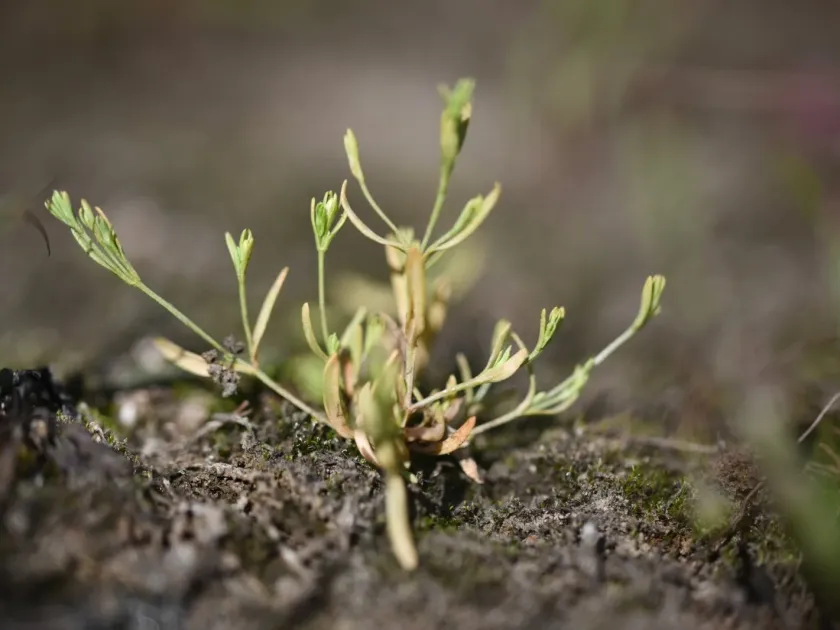
Description
Sowing dates
Exaculum pusillum, a member of the Gentianaceae family, is a delicate annual herb that requires specific care during the initial stages of cultivation. Sowing is typically performed in late spring when the soil temperature consistently reaches the range required for germination.
The seeds are extremely small and should be scattered over the surface of a fine, well-prepared seedbed. Pressing the seeds gently into the soil surface without covering them with a thick layer of earth is crucial for achieving high germination rates.
Effective weed management is essential during the early weeks, as the slow-growing seedlings are easily outcompeted by aggressive weeds. Maintaining a clean field environment ensures that the young plants receive adequate light and nutrients.
Row spacing should be managed to ensure proper air circulation, which helps in preventing damping-off diseases that can be prevalent in small annual crops of this type. Utilizing a light, well-draining substrate for sowing boxes can also improve early survival rates.
The growth cycle of Exaculum pusillum is naturally timed to take advantage of favorable seasonal windows, making timely planting vital to ensure the crop completes its life cycle before mid-summer heat stress occurs.
Growing requirements
This crop thrives in open, sun-drenched locations. Sufficient exposure to direct sunlight is a primary requirement for the development of sturdy stems and consistent flowering across the field population.
Well-drained soil is non-negotiable for the cultivation of this species. It prefers sandy or loamy soils that allow excess water to drain quickly, as root saturation leads to immediate decline and susceptibility to pathogens.
Exaculum pusillum prefers neutral soil pH levels. Excessive acidification or alkalinity can lead to nutrient lockout, negatively impacting the overall health and size of the plants, which are naturally small in stature.
Watering management should focus on consistency rather than high volume. Light, regular irrigation that mimics natural precipitation patterns is far more beneficial than heavy soakings, which can compact the soil surface.
Temperature management is largely dependent on site selection, as the plant is not highly tolerant of extreme thermal fluctuations. It prefers moderate, temperate conditions that support steady, uninterrupted vegetative and reproductive growth.