
Pseudorhipsalis ramulosa
Pseudorhipsalis ramulosa
Description
Growing requirements
Pseudorhipsalis ramulosa is an epiphytic cactus belonging to the Cactaceae family, natively found in the tropical rainforests of Central and South America. Unlike desert cacti, this species thrives in humid environments, typically growing on trees where it receives dappled sunlight.
The climate requirements for this culture include stable, moderate temperatures, ideally between 18 and 26 degrees Celsius. It is crucial to maintain high relative humidity and avoid exposure to direct, intense sunlight, which can quickly dehydrate and burn the flattened stems.
For soil management, a well-draining, airy substrate is necessary to mimic the natural epiphytic conditions. An ideal potting mix should consist of peat, bark, and perlite, ensuring that the roots have access to oxygen while retaining essential moisture.
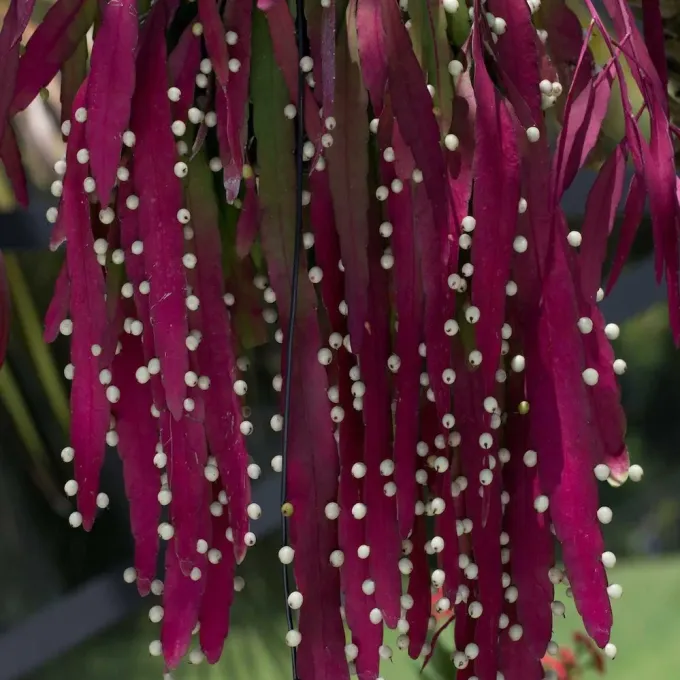
Agrotechnical practices emphasize consistent but cautious watering, allowing the top layer of the substrate to dry slightly between applications. During the active growth phase, balanced fertilization is recommended to support the development of its unique, red-flushed branching structures.
The economic value of this plant lies in its role within the ornamental plant industry. Its cascading growth habit and changing color palette make it a premium choice for indoor landscaping and specialized botanical collections worldwide.
Main diseases and pests
The primary agricultural threats include root rot and fungal stem blights, which are typically caused by stagnant moisture or poor soil aeration. To prevent these conditions, growers must ensure excellent pot drainage and adequate airflow around the plant canopy.
Pest infestations, particularly by mealybugs, aphids, and spider mites, pose significant risks to the plant's health. Systematic monitoring and the use of appropriate horticultural oils or insecticides are required to manage these populations effectively and maintain plant vigor.