
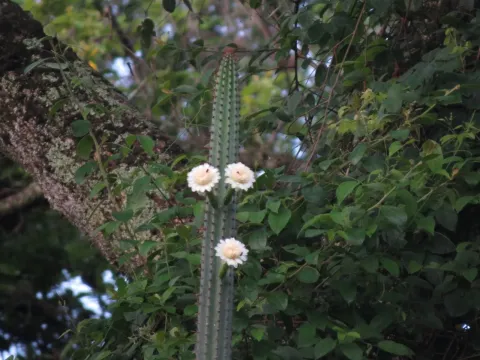
Monvillea
Monvillea
Monvillea is a genus of succulent plants within the Cactaceae family, known for its columnar or tree-like growth habit. These cacti typically feature elongated stems with distinct ribs and are often categorized under the genus Cereus in modern botanical taxonomy.
What the section contains


Monvillea
Originating from South America, particularly regions in Brazil and Argentina, these plants are adapted to arid and semi-arid environments. In cultivation, they require conditions that mimic their natural habitat to thrive and reach their full growth potential.
The soil requirements are strict; they demand highly porous, well-draining mineral-based mixes. A composition of coarse sand, perlite, and a small amount of potting soil is generally recommended to ensure the roots do not remain saturated for long periods.
Light intensity is a critical factor for Monvillea. These plants require full sun or at least partial sun exposure to maintain structural integrity and prevent etiolation. In greenhouses, supplemental lighting may be necessary during winter months to keep the plants compact.
Temperature management is vital, with a preferred range of 20 to 30 degrees Celsius during the growing season. A cool, dry dormancy period in winter, ideally between 10 and 15 degrees Celsius, is crucial for triggering future flowering and maintaining general plant health.
The most common threat to Monvillea is root rot, primarily caused by water stagnation in the growing medium. Overwatering is the leading cause of plant mortality and should be mitigated by allowing the soil to dry completely between watering sessions.
Pests such as mealybugs represent a persistent challenge for succulent growers. These insects congregate in the crevices between the ribs, where they are protected, making manual removal or systemic insecticides necessary for control.
Spider mites can also be problematic, especially in hot and dry greenhouse environments. These pests cause discoloration of the epidermis, often manifesting as fine, silvery patches on the surface of the cactus stems.
Scale insects may also attach themselves to the stems. Regular inspection and wiping the stems with isopropyl alcohol can help manage low-level infestations before they spread to other plants in the collection.
Fungal infections can quickly compromise the plant's health, particularly after physical damage or improper pruning. Applying copper-based fungicides to affected areas can help stop the progression of rot and promote healing.