
Monvillea cavendishii
Monvillea cavendishii
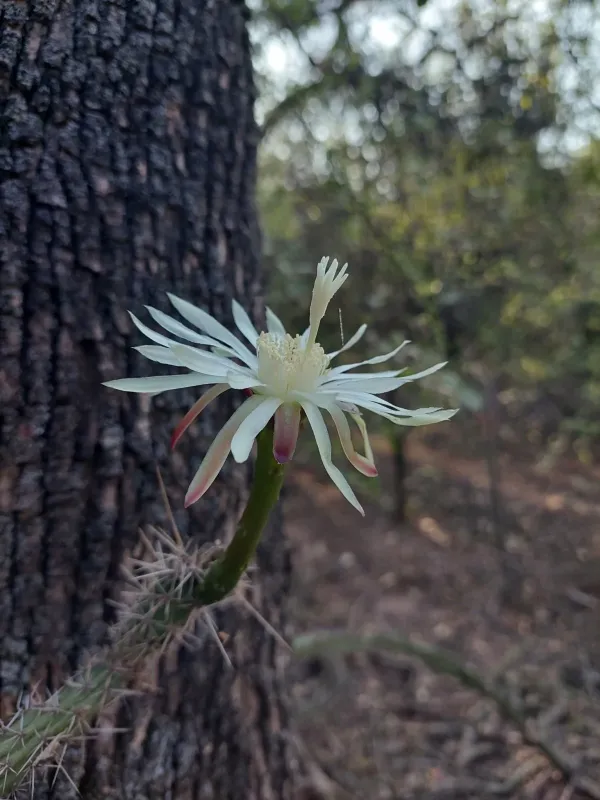
Description
Growing requirements
Monvillea cavendishii, belonging to the Cactaceae family, is a fascinating succulent originating from the tropical regions of South America. It is specifically noted for its climbing or sprawling habit, often found in rocky, well-drained habitats across Paraguay and Argentina.
The botanical structure of the plant consists of long, slender, ribbed stems equipped with spines, which serve as a mechanism for both defense and moisture conservation. In its natural range, it can reach significant lengths, often climbing through surrounding vegetation to reach sunlight.
To successfully cultivate Monvillea cavendishii, one must provide bright, indirect sunlight and a highly porous soil mix. A mixture consisting of coarse sand, perlite, and a small portion of organic potting soil is highly recommended to ensure proper drainage.
Agricultural techniques for this species revolve around mimicking its native seasonal cycles. Water should be provided sparingly during the active growth phase, allowing the soil to dry out completely between waterings. During the dormant winter phase, the plant requires a period of cool temperatures and no water.
In terms of хозяйственное usage, this plant is predominantly used in the botanical garden trade and by succulent enthusiasts. It is valued for its unique architectural form, making it a popular choice for xeriscaping or specialized arid-climate greenhouse displays.
Main diseases and pests
Like many cacti, Monvillea cavendishii is highly susceptible to root and stem rot when grown in damp or stagnant conditions. Excessive soil moisture is the primary cause of decline, making drainage a critical aspect of plant management.
Pests such as mealybugs and spider mites are frequent invaders that target the grooves between the ribs of the stems. These pests can rapidly drain the plant of nutrients, leading to stunted growth and increasing the risk of secondary fungal infections.
Control strategies involve the use of systemic insecticides or mechanical removal for localized infestations. It is essential to quarantine new specimens before adding them to a collection to prevent the spread of these troublesome arthropods.
Environmental stress, particularly a lack of adequate ventilation, can lead to the formation of corky patches on the stem surface, which is a defensive response of the cactus. Proper air circulation helps keep the surface of the plant dry and less attractive to mold spores.
Maintaining a healthy, well-lit environment is the best deterrent against these threats. Strong, vigorous growth is naturally better equipped to withstand occasional pest pressure or minor pathogen exposure than plants weakened by poor care.