
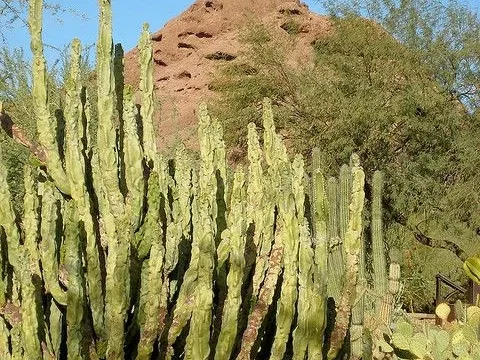
Lophocereus
Lophocereus
Lophocereus is a genus of arborescent cacti belonging to the Cactaceae family. Native to the arid regions of Mexico and the Baja California Peninsula, these plants are well-adapted to harsh, desert environments characterized by limited rainfall and high solar radiation.
What the section contains


Lophocereus
Botanically, the plant is known for its tall, columnar, and ribbed stems. A distinct feature of species like Lophocereus schottii is the development of long, hair-like spines on the fertile stems, which contrast sharply with the shorter, sharper spines found on younger growth.
The cultivation requires highly permeable, mineral-rich substrates. A mix of sand, gravel, and perlite is ideal for preventing water stagnation. The plant requires minimal organic nutrients; excess fertilizers can cause structural weakness and etiolation.
Optimal growth conditions involve full sun exposure and warm temperatures during the vegetative season. During the dormant winter period, the plant must be kept dry and cool, ensuring that temperatures do not drop below the critical threshold for the specific species.
The economic role of Lophocereus is primarily horticultural. It is highly valued in arid-land landscaping and among private cactus collectors. While historically significant to some indigenous cultures, it is not utilized for large-scale agricultural production.
The primary threats to Lophocereus are fungal pathogens triggered by poor drainage and overwatering. These conditions quickly lead to stem rot, which is often fatal if not detected and addressed by removing the infected tissue immediately.
Pest management should focus on monitoring for spider mites and mealybugs. These insects often hide in the crevices of the ribs. Routine inspection and application of specialized horticultural oils or systemic pesticides are recommended to preserve the integrity of the plant.