
Espostoopsis dybowskii
Espostoopsis dybowskii
Description
Growing requirements
Espostoopsis dybowskii is a distinctive columnar cactus species belonging to the Cactaceae family. Originating from the Brazilian state of Bahia, this plant typically thrives in rugged, limestone-rich rocky terrains, adapting well to specific microclimatic niches.
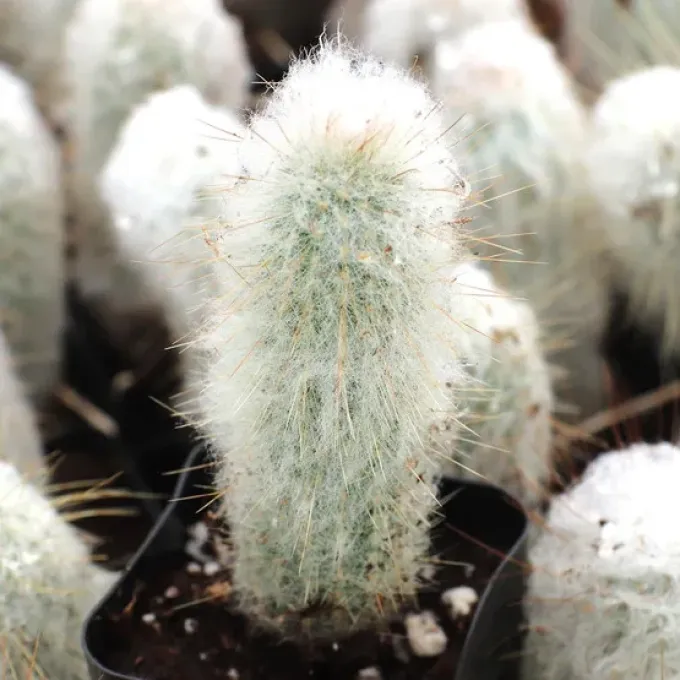
The plant is botanically renowned for its thick, white, hair-like spines that densely cover its stem. This adaptation acts as a natural shield against extreme solar radiation and helps the cactus regulate its surface temperature, preventing dehydration in harsh environments.
To cultivate this species successfully, growers must prioritize a highly permeable substrate. A mix of pumice, perlite, and coarse sand is essential to prevent water accumulation near the root zone, as the plant is highly sensitive to excessive moisture.
Providing optimal environmental conditions involves ensuring full sun exposure and a well-ventilated space. During the active growth season, water should be applied only when the substrate has completely dried out; winter months require near-total dormancy in cool, dry conditions.
The primary economic and aesthetic utility of Espostoopsis dybowskii lies in the niche horticultural market and botanical collections. Its slow growth rate and architectural beauty make it a prized specimen for enthusiasts of rare xerophytic flora globally.
Main diseases and pests
The most significant threat to the health of this cactus is fungal decay caused by waterlogging. Root rot often progresses silently within the dense hairs, leading to permanent damage to the vascular tissues and eventually total loss of the specimen.
Mealybugs are the most persistent pests affecting this species, as they can easily establish colonies protected by the plant's white pubescence. Regular monitoring is necessary to prevent these insects from extracting essential sap and causing secondary infections.