
Navia arida
Navia arida
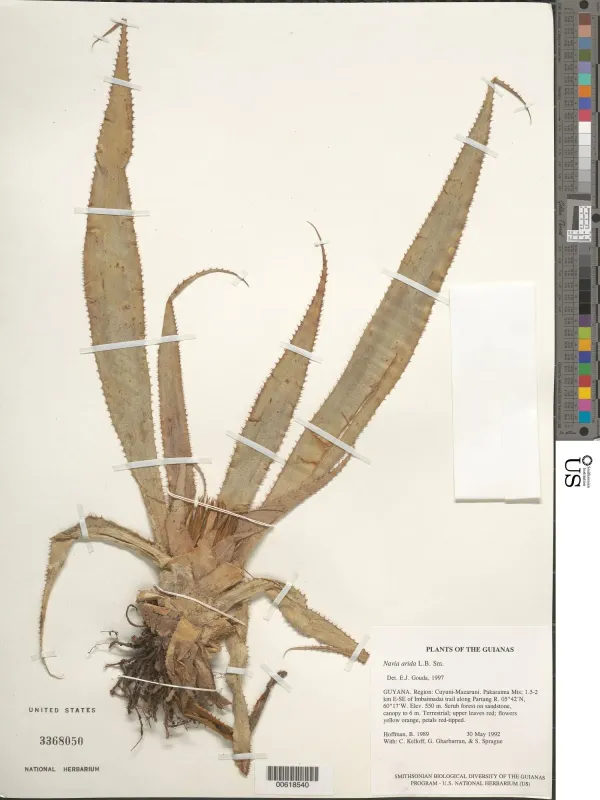
Description
Growing requirements
Navia arida is a distinct perennial herbaceous species belonging to the Bromeliaceae family. Unlike many epiphytic bromeliads, this species is terrestrial and has evolved specialized adaptations to survive in the arid environments of its native habitat.
The plant is native to the high-altitude tepuis of Venezuela, where it grows in nutrient-poor, rocky substrates. Its survival strategy depends on limited moisture availability and significant diurnal temperature fluctuations typical of high-mountain regions.
Successful cultivation requires a highly porous, gritty substrate that ensures rapid drainage. Heavy soils or stagnant moisture are detrimental to the plant, as the root system is prone to rot when deprived of oxygen or exposed to excessive humidity.
In terms of light and temperature, Navia arida thrives under high light intensity. It is best suited for environments that mimic its natural mountain climate, characterized by cool nights and bright, relatively temperate days at high altitudes.
While not a traditional agricultural commodity, Navia arida holds significant scientific interest. Its primary utility lies in botanical conservation, specialized horticultural collections, and as genetic material for developing drought-tolerant ornamental plants.