
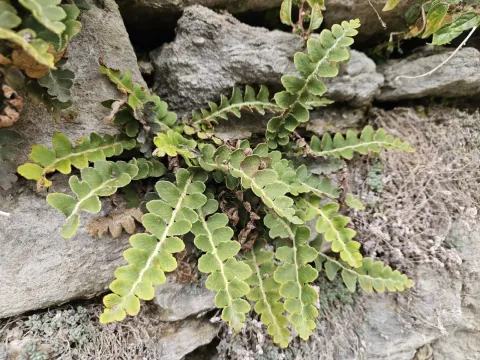
Rustyback fern
Asplenium ceterach
The Rustyback fern is a unique member of the Aspleniaceae family known for its resilience and xerophytic nature. It is naturally adapted to survive on rocky outcrops and ancient walls where moisture is scarce.
What the section contains
Rustyback fern
Originating from the Mediterranean and temperate regions of Asia, the plant thrives in limestone-rich environments. The pH levels of the soil should be alkaline, mimicking its natural habitat to support healthy growth.
Cultivation requires exceptional drainage conditions. Growers must ensure that the substrate consists of coarse materials such as crushed limestone, grit, and minimal organic matter to prevent waterlogging.
Sunlight requirements are moderate. While the plant can tolerate full sun, it performs best in partial shade, especially in climates with extreme summer temperatures, which prevents the leaf scales from burning.
The species is drought-tolerant, utilizing specialized physiological mechanisms to roll up its leaves during extreme desiccation. Water should be applied only when the growth medium is completely dry.
The primary economic use of the Rustyback fern lies in the pharmaceutical industry. The harvested leaves are processed into tinctures or powders known for their medicinal properties as expectorants.
In addition to medicinal production, the plant is highly sought after by landscape designers and collectors. It is an essential component for rock gardens, stone walls, and xeriscaping projects due to its minimal maintenance.
Production cycles are lengthy due to the plant's slow growth rate. Successful commercial operations prioritize the development of well-established, healthy rosettes that command high market prices as ornamentals.
Yield estimation in a farming context is focused on the annual increase in biomass, which remains modest. Therefore, intensive cultivation methods are usually balanced with high-value product positioning.
Sustainable harvesting of the species is vital. Cultivation in controlled environments helps preserve wild populations while ensuring a steady supply of standardized plant material for research and trade.
Root rot is the most significant threat to the Rustyback fern. Pathogens thrive in poorly drained soils, making precise irrigation management the single most important agronomic practice for survival.
Fungal leaf spot can occur if the humidity levels remain too high for extended periods. Promoting air circulation around the plants is an effective preventive measure for greenhouse-grown stock.
Invasive weeds pose a substantial risk to young, developing ferns. As a slow-growing species, it struggles to compete for nutrients and light, necessitating rigorous manual weeding in the beds.
Pests are generally not a problem in outdoor settings. However, in enclosed glasshouse environments, careful monitoring for aphids and spider mites is necessary to protect the aesthetic quality of the fronds.
Improper fertilization can lead to salt accumulation in the substrate, which the fern is highly sensitive to. Avoiding chemical fertilizers and relying on naturally mineral-rich substrates is recommended.