
Petrarch's spleenwort
Asplenium petrarchae
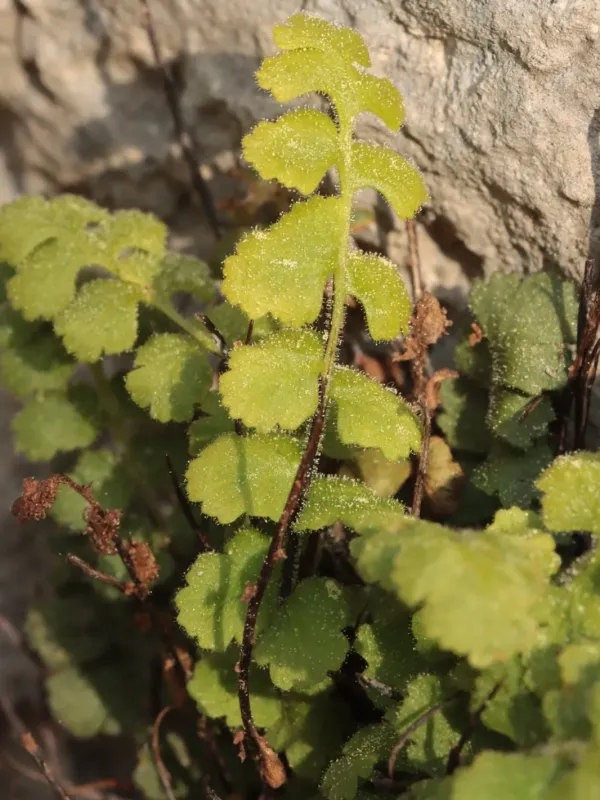
Description
Growing requirements
Petrarch's spleenwort (Asplenium petrarchae) is a hardy perennial fern belonging to the Aspleniaceae family. It is distinct for its preference for calcicolous habitats, specifically growing in the crevices of limestone cliffs and rocks.
Native to the Mediterranean region, this species has evolved to withstand long periods of drought and high solar radiation. Its morphology includes small, glandular fronds that are perfectly adapted to thrive in xeric conditions.
Successful cultivation requires a specialized mineral-rich substrate. Growers must ensure the mix contains a significant portion of limestone chippings or gravel to maintain a neutral to alkaline pH, which is essential for the plant's metabolic health.
Regarding climate, this fern is not a tropical plant; it requires cool, well-ventilated conditions during the growing season. In indoor or greenhouse settings, the plant should be positioned in a bright spot but protected from intense direct summer midday sun.
The horticultural value of Asplenium petrarchae lies in its use within specialized rock garden collections. Due to its slow growth rate and specific environmental requirements, it is considered a niche species for advanced gardeners and botanical institutions.
Main diseases and pests
The most significant threat to Petrarch's spleenwort is root rot caused by poor drainage. Since the plant is naturally adapted to vertical cliff crevices where water drains almost instantly, any water accumulation around the rhizome is fatal.
Pests such as spider mites and scale insects are common adversaries. These infestations can rapidly weaken the plant, especially if the ambient humidity is kept too low, which often happens in residential indoor environments.
Fungal leaf spot diseases may appear if there is inadequate air circulation. It is crucial to maintain a dry foliage environment, as water droplets left on the fronds can encourage the rapid spread of spores or bacteria.
Nematodes are another potential biological threat. They can disrupt the plant's nutrient uptake, leading to yellowing and premature death of the fronds, which often requires the removal and destruction of the infected specimen to protect others.
Environmental stress, particularly sudden changes in humidity or exposure to chemicals in tap water (such as chlorine or heavy salts), can cause tip burn. Using filtered or collected rainwater is strongly advised to maintain long-term health.