
Shining spleenwort
Asplenium lamprophyllum
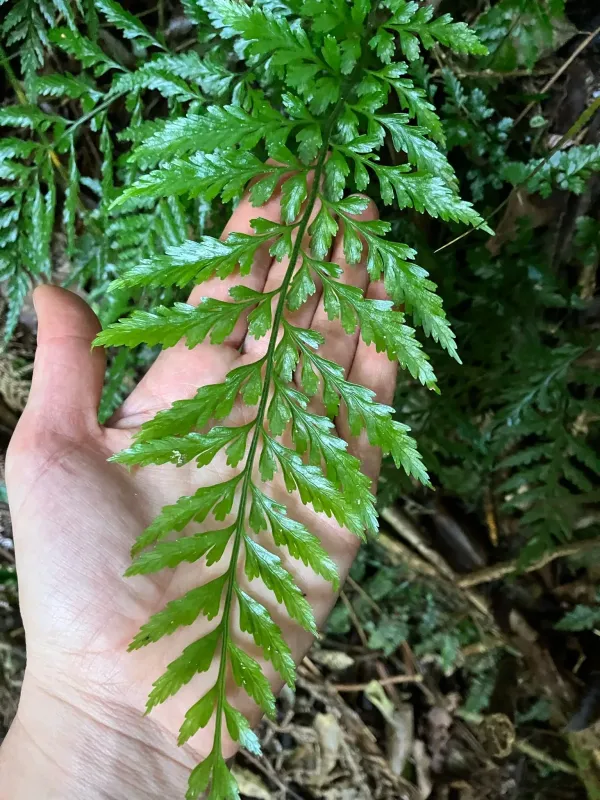
Description
Growing requirements
Shining spleenwort (Asplenium lamprophyllum) is a perennial decorative fern belonging to the Aspleniaceae family. It is native to the lush, temperate rainforests of New Zealand, where it grows in the shaded understory protected from direct sunlight.
Botanically, this fern is characterized by its glossy, leather-like fronds arranged in a tight basal rosette. The species is highly valued for its aesthetic appeal, often serving as a focal point in indoor gardening or conservatory settings due to its deep green foliage.
The cultivation of this plant requires a stable environment with temperatures between 18°C and 24°C. It is crucial to maintain high humidity levels, as the plant originates from maritime-influenced climates and suffers significantly under dry conditions.
For optimal growth, the substrate must be light, well-draining, and rich in organic matter. A mixture of peat, perlite, and decomposed forest bark is recommended to mimic the natural floor conditions while preventing root rot caused by stagnant water.
Maintenance includes consistent watering with soft, room-temperature water. The plant should never be left to dry out completely, yet the potting medium should remain damp, not waterlogged, throughout the active growing season.
Main diseases and pests
The primary health threats to the shining spleenwort include root rot and crown rot, which are triggered by overwatering and poor aeration of the potting soil. These issues often lead to the rapid decay of the rhizome system.
Scale insects and mealybugs are the most common pests. They typically hide in the tight spaces between the frond stalks and the base of the plant, weakening the specimen by feeding on its nutrient-rich sap.
Spider mites can become a major concern if the ambient humidity drops below recommended levels. Their activity is marked by fine webbing and the appearance of chlorotic spots on the fronds.
Management involves early detection through regular inspection of the foliage. Using insecticidal soaps or neem oil is generally effective if applied carefully to both the upper and lower surfaces of the leaves.
Maintaining proper air circulation is essential to prevent fungal outbreaks. Avoiding overhead watering and keeping the fronds dry during the night helps significantly in reducing the risk of pathogen transmission.