
Ostrich fern
Onoclea pensylvanica
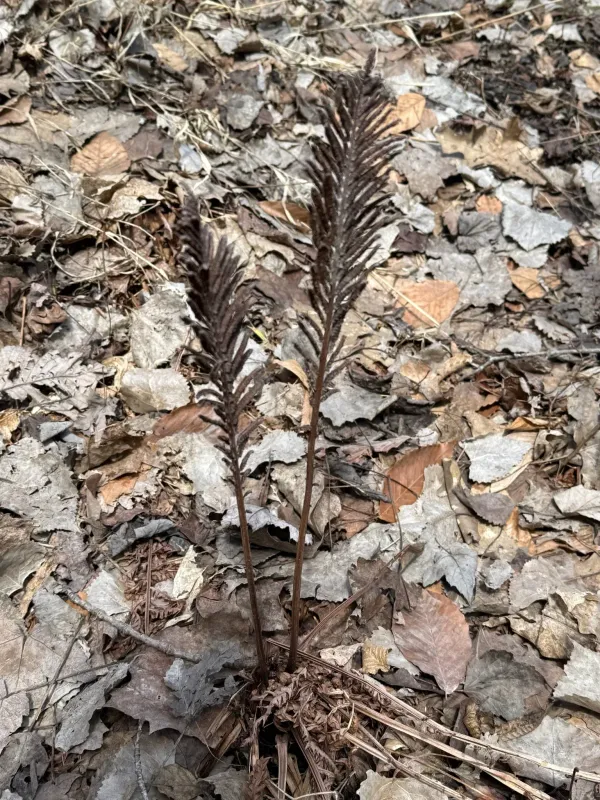
Description
Sowing dates
The propagation of the Ostrich fern (Matteuccia struthiopteris) is most effectively managed through vegetative means. The best time for dividing rhizomes is early spring, just before the new fronds emerge, or during the autumn dormancy period.
When planting, rhizome segments should be placed at a depth of 10-15 centimeters. This ensures proper protection of the buds from cold and encourages robust root development during the initial growth phase.
Planting density depends on the purpose of the cultivation. For creating dense ground cover or commercial fiddlehead production, a spacing of 3 to 5 plants per square meter is recommended to allow for optimal expansion.
Gardeners and farmers must consider that this fern is highly aggressive, spreading via underground stolons. Proper site planning or the use of root barriers is essential to prevent the plant from overstepping its designated cultivation zone.
Propagation by spores is a highly specialized process, typically reserved for breeding programs. It requires sterile laboratory conditions, consistently high humidity, and meticulous climate control over several months to successfully develop the prothallus.
Growing requirements
The Ostrich fern is a member of the Onocleaceae family, well-adapted to temperate climates. It thrives in shaded or semi-shaded environments, avoiding direct sunlight which can scorch its delicate fronds.
Constant moisture is the most critical requirement for its cultivation. The plant is highly sensitive to drought; therefore, irrigation systems must be maintained to keep the soil consistently moist throughout the growing season.
The ideal soil is loose, fertile, and rich in organic matter. Slightly acidic or neutral loamy soils or amended peat soils provide the necessary structure to support growth while ensuring adequate aeration for the roots.
This species is exceptionally cold-hardy and requires no special protection during winter, as it is native to wide regions across Europe, Asia, and North America. It is well-suited for temperate agriculture.
Mulching around the base of the ferns is a recommended management practice. It aids in moisture retention, suppresses competing weeds, and provides a gradual supply of nutrients as the organic mulch decomposes.
Yield
The economic value of the Ostrich fern is derived from its young, coiled shoots, known as fiddleheads. These are highly prized in various culinary traditions for their unique texture and nutritional content.
Peak production is usually observed in established plantings that are 3 to 6 years old. During this phase, the root system is sufficiently large to support vigorous production of stoloniferous shoots.
Harvesting is performed in early spring when the fiddleheads reach 10-15 centimeters in height but remain tightly coiled. It is imperative to leave a portion of the fronds to ensure the plant can continue its photosynthesis and survive the season.
Over-harvesting can drastically weaken the plant. Professional management entails rotating harvest zones within the plantation to ensure the long-term health and productivity of the colony.
Fiddleheads require immediate processing. Boiling or steaming is essential to neutralize compounds that may cause digestive discomfort, ensuring the final product is safe for market consumption.
Main diseases and pests
Although the Ostrich fern is generally resilient, it can be susceptible to fungal diseases such as leaf spots, particularly in areas with high humidity and poor air circulation. Proper spacing and site hygiene are the best preventative measures.
Foliar nematodes are among the most significant pests, leading to necrotic tissue and frond decline. Strict sanitation, including the removal and destruction of infected foliage, is crucial to contain any potential outbreaks.
Slugs and snails can cause significant damage to emerging fiddleheads in the spring. Integrated pest management, such as the use of barriers or approved biological control agents, is recommended to protect the crop.
To reduce disease pressure, old or diseased fronds should be cleared away at the end of each season. This prevents the accumulation of inoculum that could lead to infections in the following spring.
By maintaining proper hydration levels and preventing waterlogged soil conditions, the Ostrich fern remains a hardy and low-maintenance crop that rarely requires the application of heavy chemical treatments.