
Shining spleenwort
Asplenium oblongifolium
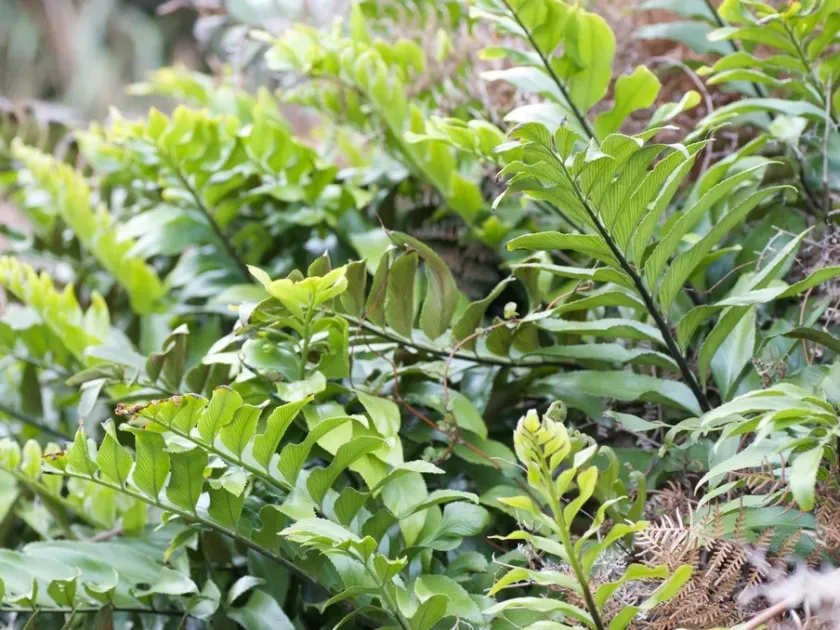
Description
Growing requirements
The Shining spleenwort (Asplenium oblongifolium) is a perennial fern native to New Zealand. It belongs to the Aspleniaceae family and is commonly found in shady, humid forest habitats where it grows both on the ground and as an epiphyte on tree trunks.
The cultivation of this fern requires a highly controlled indoor or greenhouse environment. It thrives in temperatures between 18°C and 24°C and must be protected from temperatures dropping below 10°C, which can cause significant damage to the plant's vascular system.
Watering requirements are specific: the substrate must be kept consistently moist but never waterlogged. Using lukewarm, non-chlorinated water is recommended to prevent mineral buildup and root stress, which can lead to poor plant development.
Soil structure is critical for this species. A specialized potting mix consisting of bark, peat moss, and perlite provides the necessary aeration and drainage, which is essential to prevent suffocation of the delicate root system.
Humidity management is the most important aspect of its agro-technique. Maintaining ambient humidity above 65% is vital; this can be achieved through regular misting, the use of pebble trays, or automated misting systems in professional greenhouses.
Main diseases and pests
Common pests affecting Asplenium oblongifolium include spider mites and scale insects. These pests often target the underside of the fronds, where they hide from direct inspection and feed on the plant's sap.
Root rot is the most frequent disease caused by overwatering or poor drainage. If the fronds begin to yellow or lose turgidity, it is often a sign of root suffocation, which requires immediate repotting into fresh, airy growing media.