
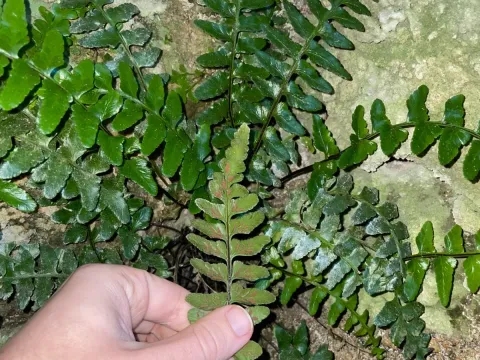
Sea spleenwort
Asplenium marinum
Sea spleenwort (Asplenium marinum) is a perennial fern belonging to the Aspleniaceae family. It is naturally found in crevices of maritime rocks, particularly along the Atlantic coasts of Europe, where it thrives in mild, humid conditions.
What the section contains
Sea spleenwort
In terms of cultivation, this species acts as a lithophyte, meaning it requires a substrate that mimics its natural habitat. A well-draining, gritty soil mix is essential to prevent root rot, as the fern is highly sensitive to waterlogged conditions.
This fern requires high ambient humidity and filtered, indirect light. Direct sunlight can scorch the fronds, while extremely dry air often leads to brown tips and overall decline of the plant's structural integrity.
Temperature management is crucial; the plant performs best in cool to moderate environments and must be protected from extreme frost and sudden heat spikes. Maintaining consistent moisture levels without overwatering is the key to successful plant management.
The cultural value of Sea spleenwort lies in its ornamental use within specialized collections and greenhouses that replicate the salty, moist maritime atmosphere typical of its native coastal ranges.
The primary threats to Asplenium marinum include fungal pathogens, which proliferate in environments with poor air circulation and excessive moisture in the growing medium.
Common indoor pests, such as aphids, scale insects, and spider mites, pose a significant risk, particularly when humidity levels fall below the recommended thresholds.
Root rot remains the most common physiological disorder caused by improper soil structure or stagnant water near the base of the plant.
Nutrient deficiency or toxicity can occur if the plant is over-fertilized; as a specialist species adapted to rocky crevices, it requires a very low-nutrient, stable environment.
Preventive measures include regular inspection of fronds, maintaining a consistent humidity level, and ensuring optimal ventilation throughout the growing period.