
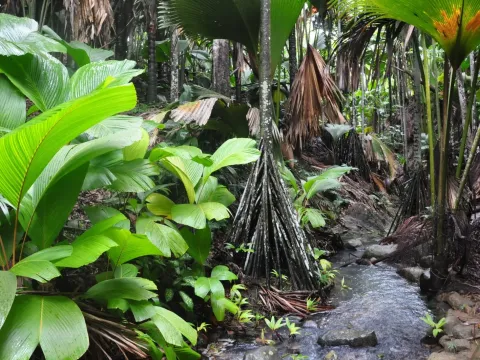
Verschaffeltia
Verschaffeltia
Verschaffeltia is a monotypic genus of palm in the family Arecaceae, native to the Seychelles islands. It is highly valued in horticulture for its distinct foliage and its status as a rare, slow-growing exotic species.
What the section contains

Verschaffeltia
This palm thrives in a warm, humid tropical environment. It requires consistent temperatures between +20°C and +30°C and cannot survive exposure to frost, which makes it suitable primarily for tropical gardening or controlled greenhouse conditions.
The planting substrate should be rich in organic matter, loose, and possess excellent drainage properties. A mix of peat, bark, and perlite is often recommended to maintain soil aeration while providing adequate moisture retention.
Light requirements are strict: the plant prefers bright, indirect light. Direct tropical sun can bleach the leaves of younger specimens, so maintaining a canopy or using shading is beneficial for juvenile growth.
Regular watering is essential, but the soil must never become waterlogged. During the growth phase, applying a balanced, slow-release fertilizer ensures the plant receives the necessary nutrients to produce healthy fronds.
Scale insects and mealybugs are the most common pests affecting Verschaffeltia. These insects hide in the tight spaces where leaves emerge from the trunk, requiring manual inspection and systemic pesticide applications.
Spider mites are a significant threat in indoor environments with low humidity. Keeping the ambient air humid and wiping the leaves regularly is the most effective preventative measure against mite outbreaks.
Root rot, primarily caused by Pythium and Phytophthora fungi, is a fatal condition resulting from waterlogged conditions. Proper irrigation management is the primary defense against these soil-borne pathogens.
Leaf spot diseases can occur during prolonged periods of high humidity combined with stagnant air. Improving ventilation around the foliage helps minimize the risk of fungal infections settling on the leaf surface.
Nutritional imbalances, particularly deficiencies in potassium or magnesium, manifest as yellowing or necrotic tips on the older fronds. Frequent monitoring of soil pH and nutrient levels is necessary for long-term health.