
Wallichia
Wallichia
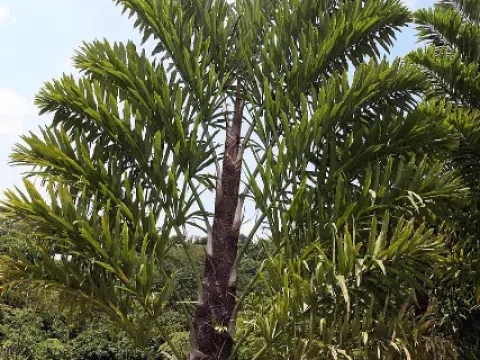
Wallichia is a genus of small to medium-sized monocious palms belonging to the Arecaceae family. This culture originates from the moist tropical forests of Southeast Asia, covering regions from the Himalayas to India, Myanmar, and China.
What the section contains

Wallichia
These plants prefer semi-shaded or shaded environments with high air humidity. In their natural habitat, they typically grow in the understory, meaning direct sunlight can scorch their leaves, particularly in younger specimens.
Successful cultivation requires fertile, well-draining, yet consistently moist soils. The ideal substrate should be rich in organic matter, mimicking the nutrient-dense leaf litter of tropical forest ecosystems.
The plant is highly heat-sensitive and does not tolerate drastic temperature fluctuations or frost. An optimal temperature range for growth is between +20°C and +28°C, provided there is adequate moisture in both the soil and the surrounding air.
Regarding хозяйственное use, Wallichia is primarily grown as an ornamental plant for landscaping in greenhouses and conservatories. Certain species possess durable fibers that are occasionally used in local industries for crafting ropes or brushes.
Wallichia is susceptible to pests commonly found in indoor and greenhouse environments. Red spider mites and scale insects are the most frequent threats, proliferating rapidly when air humidity levels drop too low.
Root rot is a major threat caused by improper watering routines. Excessive water accumulation in the pot or soil leads to rapid decomposition of the root system, which can result in the plant's demise.
Mealybugs are also common pests on this culture. By feeding on the plant's cell sap, they cause leaf deformation and promote the development of sooty mold on the sticky residue they leave behind.
Regular inspection of the underside of leaves and the root crown is essential to prevent pest outbreaks. Preventive applications of broad-spectrum insecticides can help minimize these risks significantly.
Optimizing cultivation practices, specifically ensuring proper drainage and maintaining balanced soil moisture, serves as the most effective defense against the majority of fungal and bacterial infections in this palm species.