
Wild date palm
Phoenix sylvestris
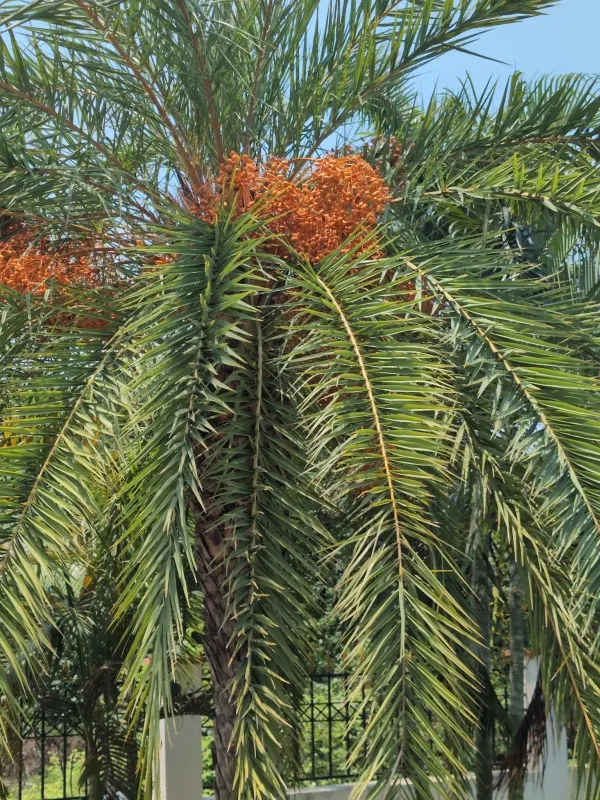
Description
Sowing dates
Propagation of the wild date palm is primarily achieved through seeds collected from ripe fruit. To ensure successful germination, the hard outer casing of the seed should be soaked in warm water for several days before planting.
The ideal time for sowing is early spring when ambient temperatures are consistently warm. Using deep pots is essential, as the species develops a long taproot very early in its development.
The planting medium must be loose, well-draining, and rich in nutrients to support healthy early growth. Keeping the soil consistently moist is crucial until the first true leaves emerge.
Once seedlings have formed several robust leaves, they can be transplanted to larger containers or permanent nursery beds. Careful handling of the root system is mandatory to avoid transplant shock.
In natural habitats, natural regeneration occurs when fruit falls into humid soil, though human-assisted sowing remains the standard for controlled cultivation.
Growing requirements
Phoenix sylvestris belongs to the Arecaceae family and is native to the Indian subcontinent. It is a highly resilient palm species capable of thriving in various soil conditions, including sandy and rocky substrates.
This species is exceptionally sun-loving and requires full solar exposure to develop a sturdy trunk and dense canopy. Shade cultivation is not recommended for commercial production.
Although drought-tolerant once established, the wild date palm benefits significantly from regular irrigation in arid environments. This practice improves growth rates and enhances sap production.
The palm is well-adapted to subtropical climates, exhibiting resistance to light frosts, which allows for cultivation in regions outside the strict tropics.
Soil pH should ideally be neutral or slightly alkaline. Good drainage is the most important factor in site selection to prevent the root rot commonly associated with waterlogged soils.
Yield
The primary agricultural utility of the wild date palm is the production of sugar. Sap is collected by tapping the stem, which is then processed into jaggery or palm sugar.
A single mature tree can yield a significant daily volume of sap, making it a sustainable source of income for smallholder farmers in South Asia.
The fruits, while small and fibrous, serve as a minor food source for wildlife and livestock. They are occasionally utilized in traditional medicine or for local fermented beverage production.
Sustainable tapping practices allow trees to produce sap for many years without compromising the long-term health of the palm stand.
Economic productivity is maximized by managing the plantation with appropriate fertilization and regular maintenance of the tappers' incisions.
Main diseases and pests
The palm weevil is considered the most serious threat to the wild date palm. This insect bores into the trunk, causing systemic damage that is often irreversible if detected too late.
Fungal pathogens causing crown rot or root rot are common in poorly drained soils. Overwatering or lack of ventilation creates an ideal environment for these pathogens to thrive.
Leaf-feeding insects, such as mites and scale insects, can reduce the photosynthetic capacity of the tree, leading to stunted growth if left unmanaged.
- Frequent monitoring of the stem for entry holes from borers.
- Maintaining proper spacing between trees to facilitate airflow.
- Pruning of dead fronds to prevent fungal colonization.
Integrated pest management strategies are recommended, focusing on early detection and the use of targeted biological controls rather than indiscriminate chemical spraying.