
Verschaffeltia splendida
Verschaffeltia splendida
Description
Sowing dates
Propagation of Verschaffeltia splendida is strictly achieved through seeds, which must be fresh to ensure viability. The germination process is notorious for its extended timeframe, often requiring several months of consistent care.
Seeds should be sown in a warm, moist, and well-draining medium. Maintaining a soil temperature between 28°C and 32°C is essential to trigger the development of the embryo within the thick endocarp.
A potting mix containing peat moss and perlite or coarse sand provides the necessary porosity for seed development. It is crucial to maintain high humidity around the seeds throughout the entire germination period.
Once seedlings emerge, they should be kept in a partially shaded environment to prevent scorching of the juvenile leaves. Sudden exposure to direct light can severely damage these delicate, slow-growing plants.
Transplanting the seedlings into individual containers should be performed with extreme care to avoid disrupting the primary root. Using deep pots allows the long taproot characteristic of this species to develop properly.
Growing requirements
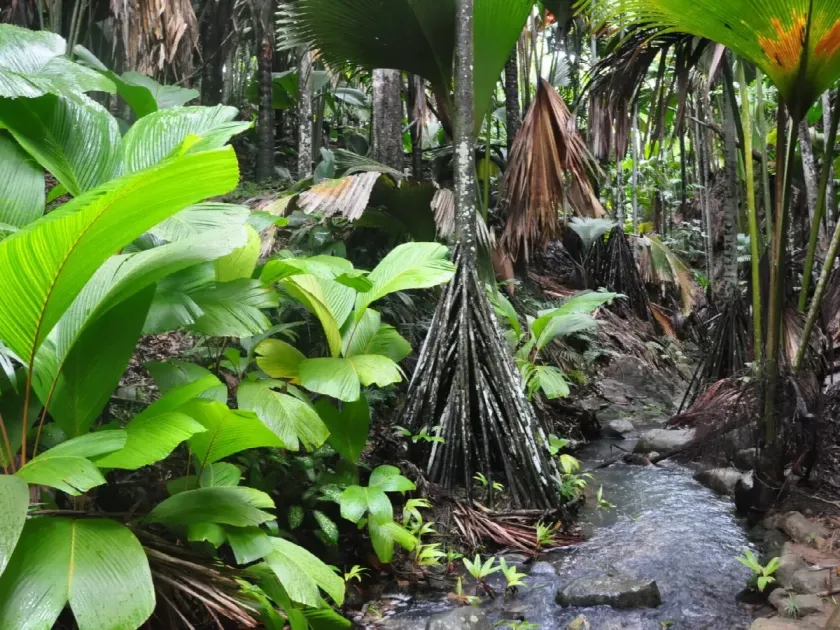
Verschaffeltia splendida, a member of the Arecaceae family, is a distinct palm known as the stilt palm due to the spines on its roots. It is native to the Seychelles, requiring a strictly tropical environment.
The plant thrives in nutrient-rich, acidic to neutral soil that offers excellent drainage. Compaction of the growing medium is a significant risk that must be avoided by using organic-rich amendments.
It requires bright, filtered light to maintain its majestic foliage color and health. While it can tolerate some morning sun, midday exposure should be avoided to prevent thermal stress on the wide leaves.
High relative humidity, ideally above 75%, is necessary for optimal growth. If grown in indoor settings, regular misting and the use of humidifiers are mandatory to mimic the natural rainforest environment.
Watering must be frequent enough to keep the soil consistently damp but never waterlogged. The palm is highly sensitive to cold, and temperatures should never drop below 18°C to prevent physiological dormancy.
Main diseases and pests
Spider mites are the most common pest, particularly when the ambient air is too dry. These microscopic pests thrive in the undersides of leaves, causing yellowing and loss of vigor if left unchecked.
Scale insects and mealybugs can attach themselves to the stems and petioles of the palm. Their presence is often identified by sticky honeydew secretions, which can subsequently lead to sooty mold growth.
Root rot, driven by poor soil drainage and overwatering, is the most lethal condition for Verschaffeltia splendida. Once the root system begins to decay, the prognosis for the plant is generally very poor.
Integrated pest management, including regular inspection of the foliage and quarantine of new plants, is the best approach to maintain a healthy collection. Cleaning leaves with a mild soapy solution can deter many pests.
Mineral deficiencies, specifically regarding magnesium and manganese, manifest as interveinal chlorosis on the older fronds. Applying a balanced, micro-nutrient-rich palm fertilizer is essential for sustaining long-term health.