
Washingtonia
Washingtonia
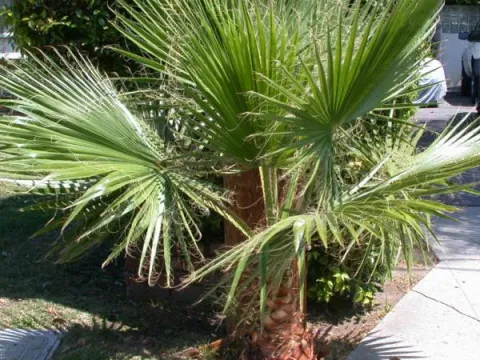
Washingtonia is a spectacular evergreen palm from the Arecaceae family. The genus consists of two primary species: Washingtonia filifera and Washingtonia robusta, which originate from the arid regions of the southwestern United States and northwestern Mexico.
What the section contains


Washingtonia
The plant features a distinctive tall trunk and large fan-shaped leaves, which often retain a "skirt" of dry leaves in mature specimens. Botanically, the crop is adapted to intense sunlight and can withstand short-term temperature drops down to -5...-8°C, though it requires reliable shelter when cultivated in temperate climates.
Successful growth of Washingtonia requires well-drained, light soil with a neutral or slightly acidic pH level. From an agrotechnical standpoint, it is crucial to provide the plant with a deep container, as the root system of this palm grows intensively in a vertical direction.
The crop is extremely light-loving: if lighting is insufficient, the leaves become elongated, lose their deep green color, and turn brittle. During summer, it is preferable to keep the plant outdoors, while the winter dormant period should occur at temperatures between +5°C and +10°C with controlled irrigation.
The main commercial and decorative use of Washingtonia lies in landscape design and interior landscaping. Due to its hardiness and aesthetic appeal, it is a popular element for avenues, parks in subtropical zones, and a highly sought-after potted plant for greenhouses and large halls.
Among pests, the spider mite and scale insects are the most dangerous for Washingtonia, as they multiply rapidly in dry indoor air conditions. Regular foliage misting and humidity monitoring are the primary methods for preventive protection.
Root rot is a serious pathogen caused by water stagnation in the tray or excessively heavy soil. Infections spread quickly without proper root aeration, so the use of fungicides must be accompanied by adjustments to the irrigation schedule.
Leaf spot, caused by fungal infections, can occur when air circulation is poor. For treatment, damaged parts of the plant should be removed, followed by application of systemic copper-based products or specialized fungicides.
Mealybugs are another common visitor, affecting the leaf axils. Upon discovery of the white "cottony" substance, the crown must be immediately washed with soapy water or treated with broad-spectrum insecticides.
Micronutrient deficiencies, especially of iron and magnesium, manifest as leaf chlorosis. While not a disease per se, it requires the application of complex chelated fertilizers, as a weakened plant becomes significantly more susceptible to secondary infections.