
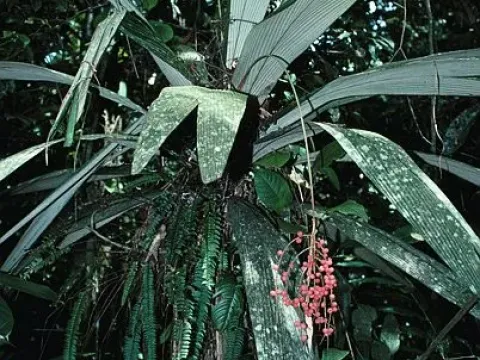
Sommieria
Sommieria
Sommieria is a rare genus of palms belonging to the Arecaceae family. These plants are native to the tropical rainforests of New Guinea, where they grow as an understory species, thriving in shaded and humid environments.
What the section contains

Sommieria
The cultivation of Sommieria requires strict adherence to environmental parameters. High ambient humidity, ideally above 75%, is essential for the plant to maintain its leaf integrity and metabolic functions in an artificial environment.
Temperature management is critical; the plant requires a steady tropical climate ranging from 22 to 28 degrees Celsius. Any drop in temperature, especially when accompanied by dampness, can cause chilling injury or dormancy that halts growth.
The preferred substrate for Sommieria must be well-draining, rich in organic matter, and possess a slightly acidic pH. The use of a mix containing sphagnum moss and bark is often recommended to mimic the forest floor composition.
Lighting requirements emphasize indirect light. Because these palms naturally grow beneath canopy layers, they are highly adapted to low light intensity. Direct sunlight is harmful and will cause immediate leaf scorch and tissue damage.
Fungal pathogens represent the most significant threat to Sommieria health. Improper irrigation leads to root rot, which is often difficult to detect until the plant exhibits signs of severe systemic decay and wilting.
Pests such as spider mites, mealybugs, and scale insects are common in greenhouse settings. These pests thrive in dry air conditions and can quickly colonize the undersides of leaves, draining the plant's vitality.
Integrated Pest Management (IPM) is recommended for this species. This includes regular scouting, maintaining optimal humidity to deter spider mites, and the judicious use of horticultural oils or systemic insecticides.
Physiological disorders often stem from water quality issues. The accumulation of salts and minerals in the growing medium, resulting from hard water usage, can cause tip necrosis and yellowing of the foliage over time.
Preventive maintenance involves consistent monitoring of the microclimate. Ensuring adequate ventilation without cold drafts prevents the onset of opportunistic leaf diseases that often follow environmental stress in confined nursery spaces.